Ohno Circle Template
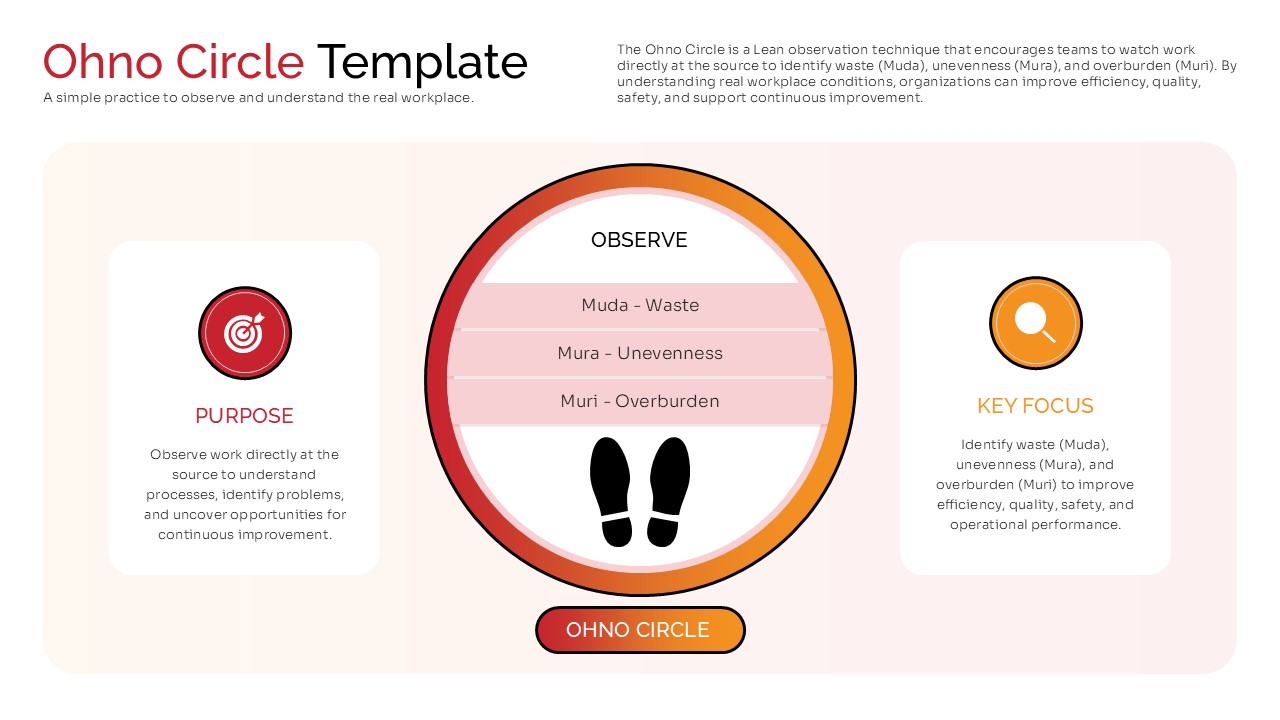
The Ohno Circle Template is a professional Lean management and continuous improvement presentation template designed to help teams understand workplace processes by observing work directly at the source. Based on the Ohno Circle practice, the template provides a clear visual framework for identifying the three major forms of operational inefficiency: Muda (waste), Mura (unevenness), and Muri (overburden).
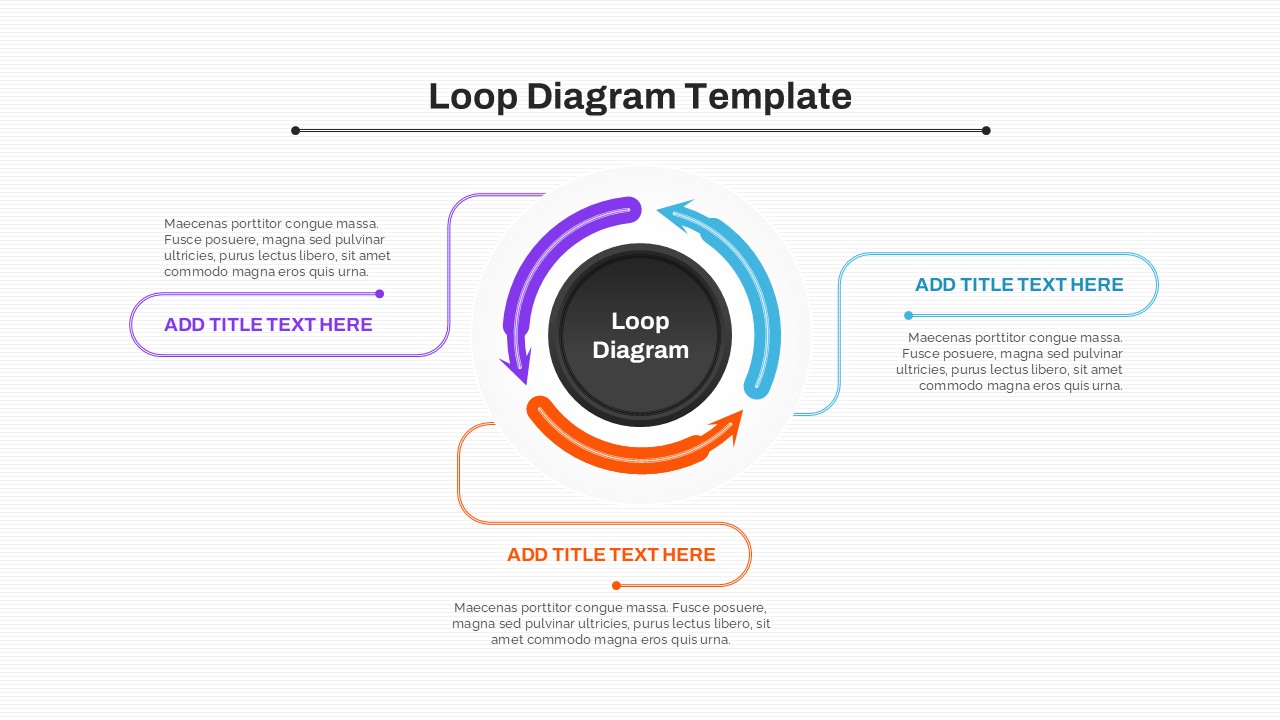
At the center of the template is a visual observation circle that emphasizes the importance of going to the actual workplace, watching processes in action, and gathering insights from real operating conditions. Supporting sections highlight the purpose of direct observation and the key focus areas teams should consider when evaluating processes. This structure makes complex Lean concepts easier to communicate during workshops, training sessions, operational reviews, and improvement initiatives.
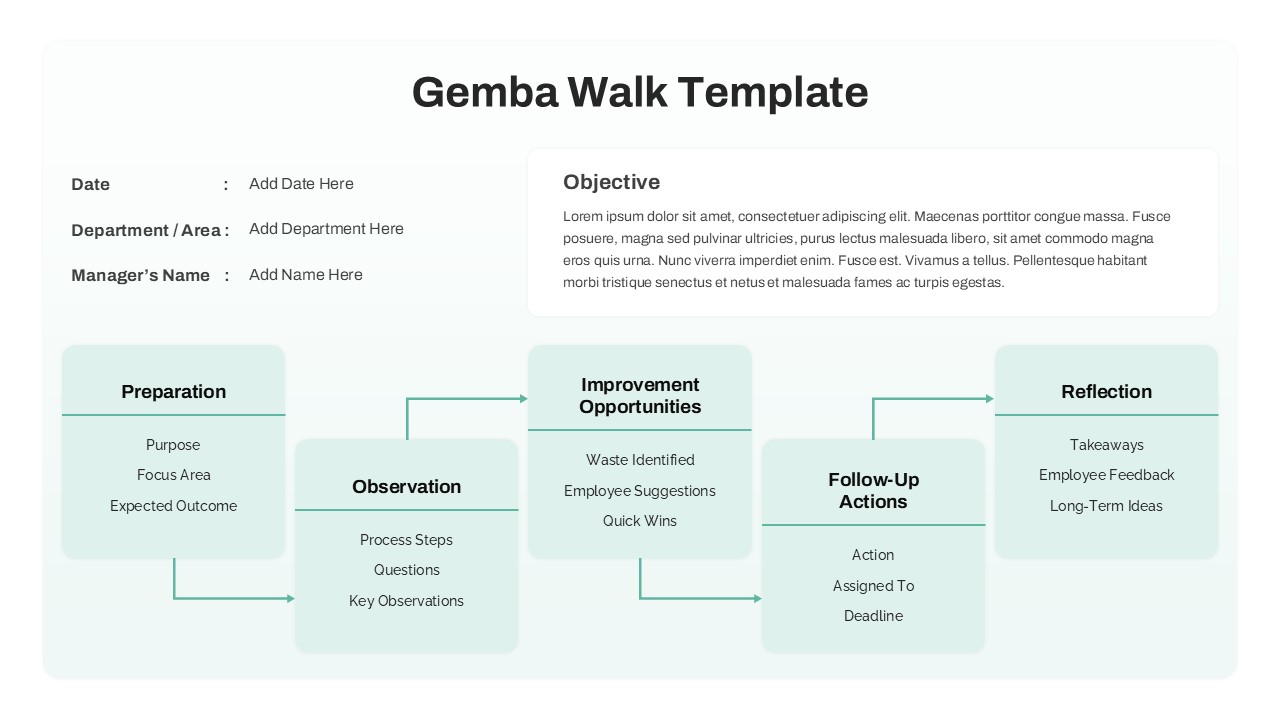
The template is particularly useful for organizations applying Lean management, Kaizen, operational excellence, Six Sigma, and process improvement methodologies. Teams can use it to structure Gemba walks, identify process inefficiencies, evaluate workload and workflow balance, and uncover practical opportunities for continuous improvement. The visual emphasis on observation encourages participants to move beyond assumptions and base decisions on what is actually happening in the workplace.
With its clean layout, professional typography, and distinctive circular visual, the Ohno Circle Template can help consultants, managers, Lean practitioners, and business teams deliver engaging presentations without having to build the framework from scratch. It can be customized to include company-specific observations, process findings, improvement opportunities, or workshop outcomes.
Available for both PowerPoint and Google Slides, this template offers flexibility for teams working across different presentation environments. Whether used for internal training, management presentations, process audits, or continuous improvement workshops, it provides a practical and visually structured way to explain how direct workplace observation can improve efficiency, quality, safety, and overall operational performance.
See more

Aspect Ratio
16:9Item ID
SKT04692


Features of this template
Other User Cases of the Template
Lean management training, Gemba walk presentations, Kaizen workshops, continuous improvement initiatives, Six Sigma presentations, operational excellence reviews, process improvement projects, workplace observation sessions, manufacturing process analysis, quality improvement programs, efficiency assessments, management consulting presentations, employee training, workflow optimization, safety improvement initiatives.FAQs
You May Also Like These Presentation Templates


- Free
- Free
- Free
- Free