COIN Conversation Model Presentation Template
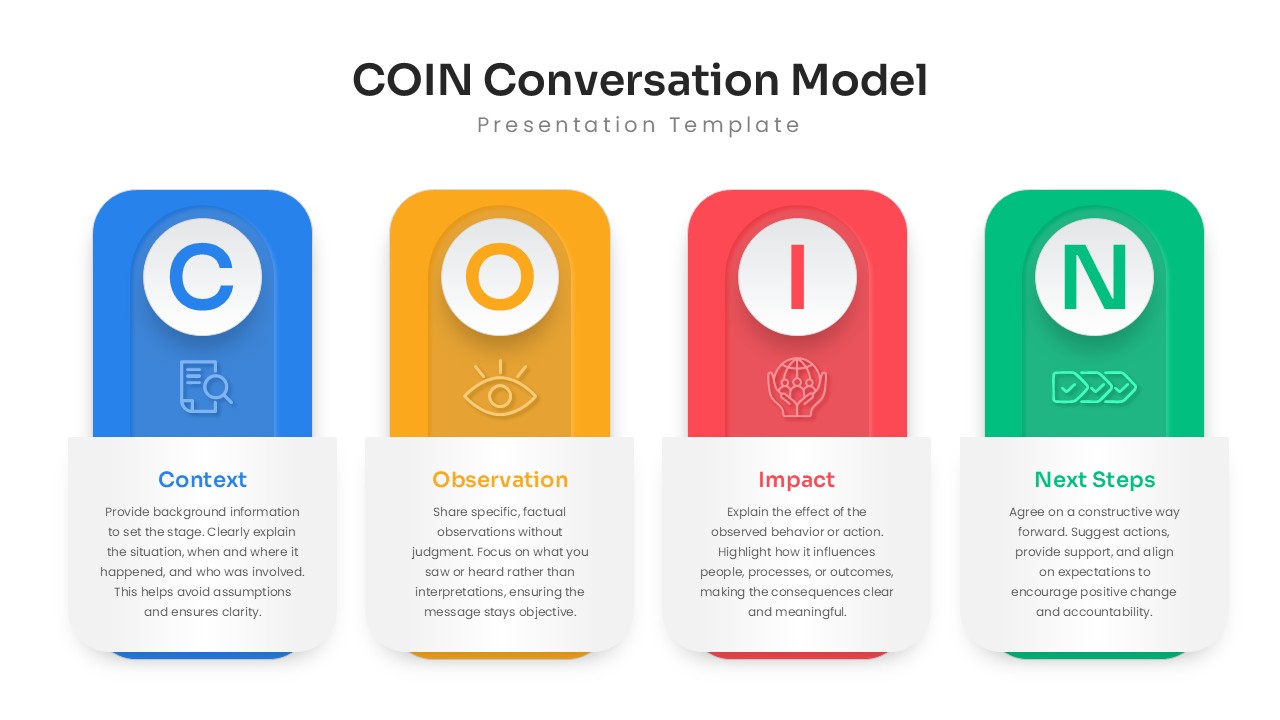
The COIN Conversation Model Presentation Template is a clean, structured, and visually engaging solution designed to facilitate clear and constructive communication. Built around the widely recognized COIN framework Context, Observation, Impact, and Next Steps—this template helps professionals deliver feedback, guide discussions, and present ideas with clarity and purpose.
Each slide is thoughtfully designed with distinct color-coded sections, making it easy to differentiate between the four stages of the COIN model. The layout emphasizes simplicity and readability, allowing presenters to focus on delivering meaningful content without visual clutter. Icons and minimalistic design elements subtly enhance understanding, ensuring that key points are communicated effectively to any audience.
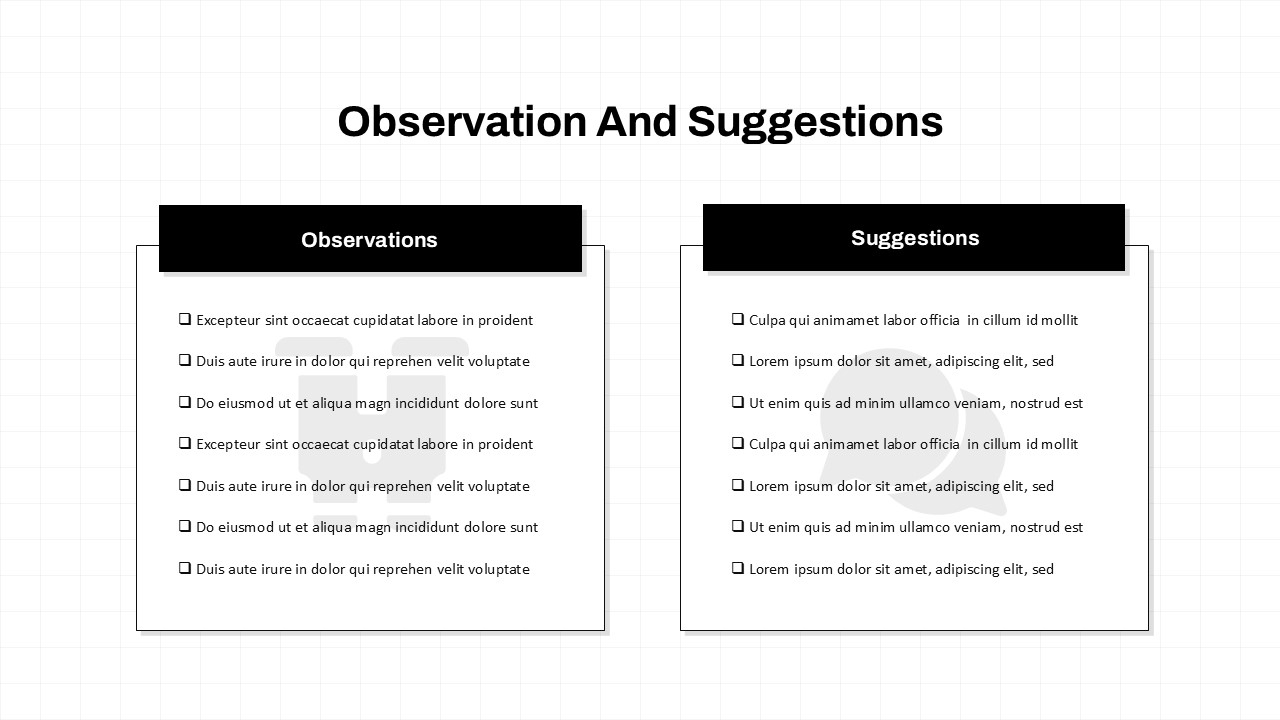
This template is particularly valuable for managers, team leaders, HR professionals, and educators who aim to foster productive conversations. Whether you’re conducting performance reviews, coaching sessions, or team discussions, the COIN structure ensures that your message remains objective, balanced, and actionable. By clearly outlining the situation (Context), presenting factual insights (Observation), explaining outcomes (Impact), and proposing solutions (Next Steps), users can drive more transparent and results-oriented communication.
Fully compatible with both PowerPoint and Google Slides, the template is easy to customize, allowing you to adapt colors, text, and layouts to suit your organization’s branding or presentation needs. Its professional design makes it suitable for corporate environments, workshops, training sessions, and academic settings alike.
With this template, you can transform complex conversations into structured, impactful presentations that encourage accountability, understanding, and positive change.
See more

Aspect Ratio
16:9Item ID
SKT04441


Features of this template
Other User Cases of the Template
Performance reviews, employee feedback sessions, leadership training, coaching conversations, conflict resolution meetings, HR workshops, team alignment discussions, project retrospectives, communication skills training, classroom discussions
FAQs
You May Also Like These Presentation Templates
- Free


- Free

- Free
- Free
- Free
- Free
- Free
- Free
- Free
- Free
- Free