
Types of Organizational Charts
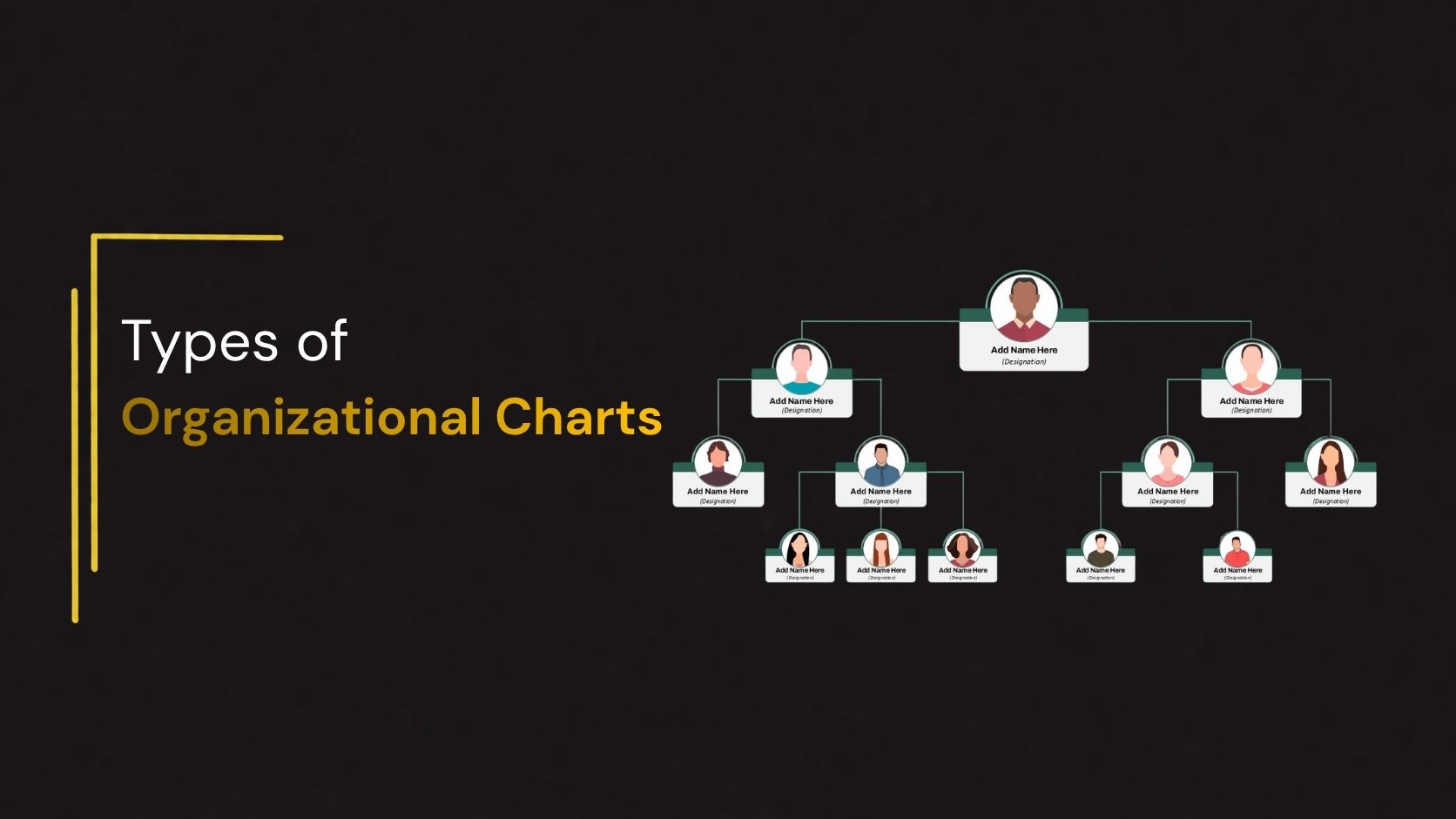
An organizational chart is one of the most effective tools for visualizing a company’s structure, reporting relationships, and departmental hierarchy. Whether you’re onboarding new employees, presenting your leadership team, planning organizational changes, or improving communication, choosing the right type of organizational chart is essential.
Different businesses require different organizational structures based on their size, industry, and management style. While a startup may benefit from a flat organizational structure, a multinational corporation often requires a divisional or matrix structure to manage multiple teams and business units.
In this guide, we’ll explore the most common types of organizational charts, their advantages, disadvantages, and the best use cases for each.
What Is an Organizational Chart?
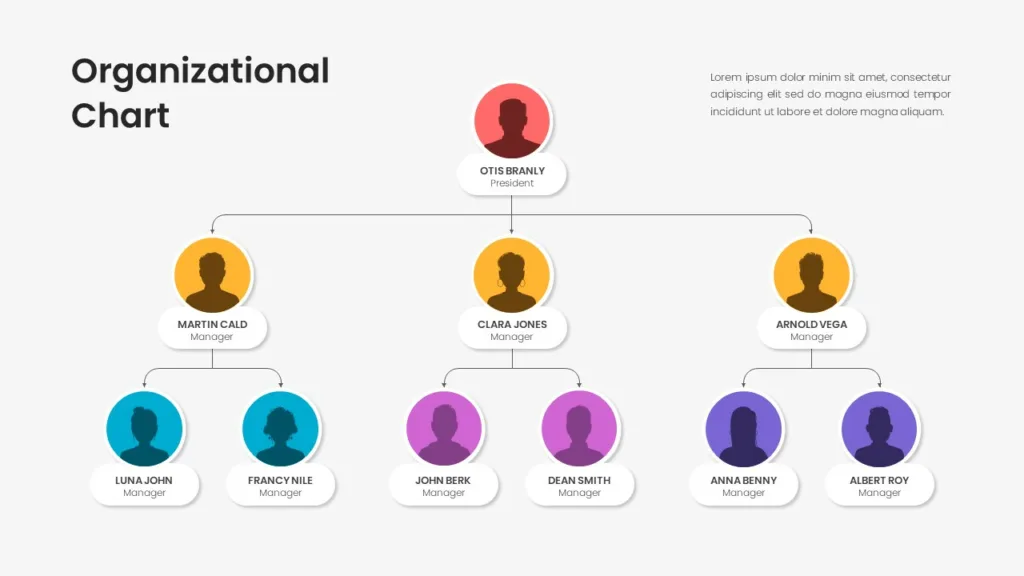
An organizational chart (org chart) is a visual diagram that illustrates the structure of an organization. It shows employees, departments, reporting relationships, and leadership hierarchy, making it easier to understand how the organization operates.
Why Are Organizational Charts Important?
A well-designed organizational chart helps businesses:
- Clarify reporting relationships
- Improve communication between teams
- Define employee roles and responsibilities
- Support organizational growth
- Simplify workforce planning
- Improve onboarding for new employees
- Enhance operational transparency
1. Hierarchical Organizational Chart
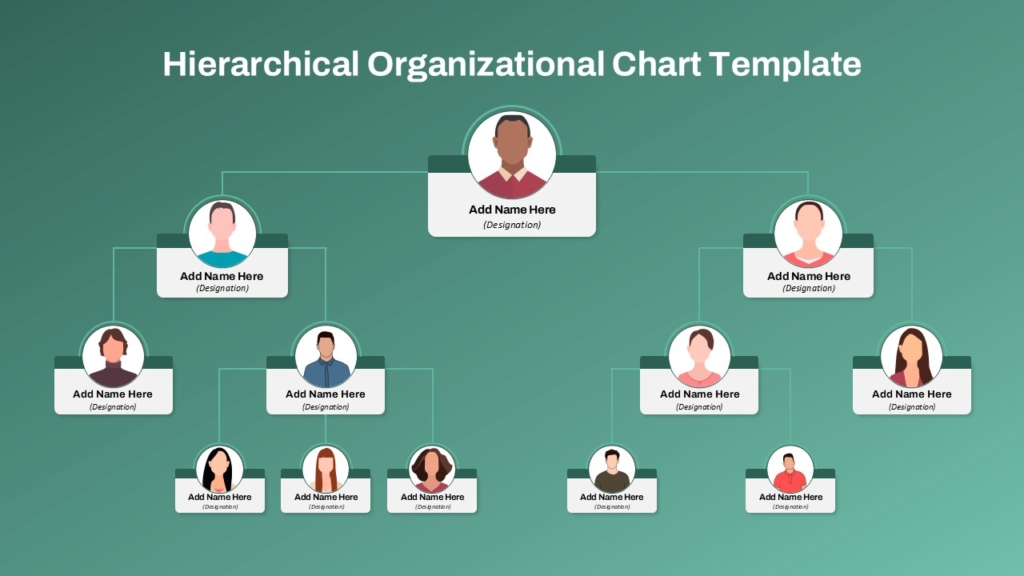
The Hierarchical Organizational Chart is the most widely used organizational structure. It displays a traditional top-down hierarchy, with senior executives at the top followed by managers, team leaders, and employees.
Best For
- Large corporations
- Government organizations
- Educational institutions
- Healthcare organizations
2. Matrix Organizational Chart
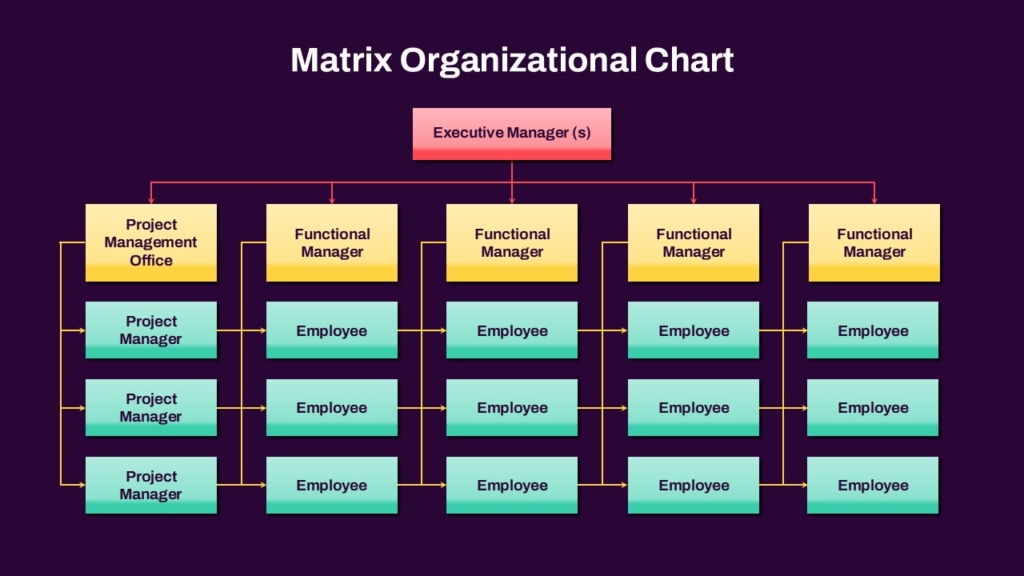
A Matrix Organizational Chart allows employees to report to more than one manager, typically a functional manager and a project manager.
Best For
- Consulting firms
- Engineering companies
- IT organizations
- Project-based businesses
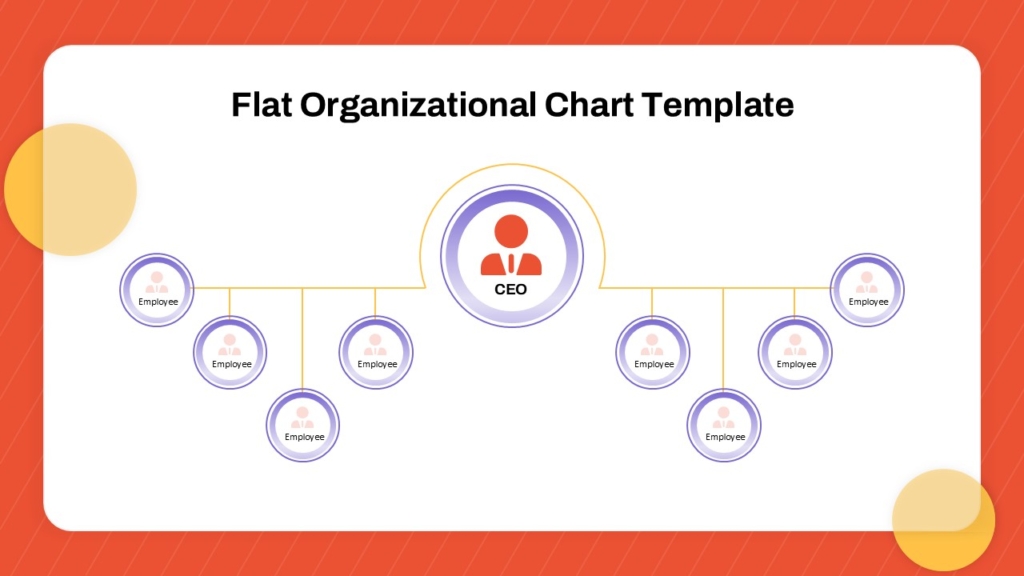
3. Flat Organizational Chart
A Flat Organizational Chart has few or no middle management layers, creating a more collaborative work environment.
Best For
- Startups
- Small businesses
- Creative agencies
- Technology companies
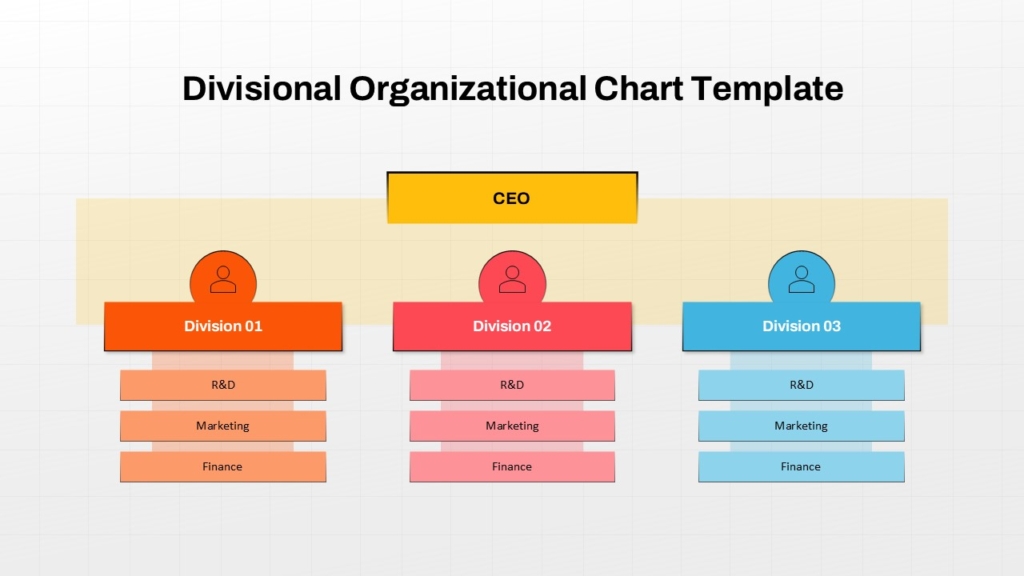
4. Divisional Organizational Chart
Large organizations often divide operations into separate business units based on products, services, or geographic regions.
Best For
- Multinational companies
- Retail businesses
- Manufacturing organizations
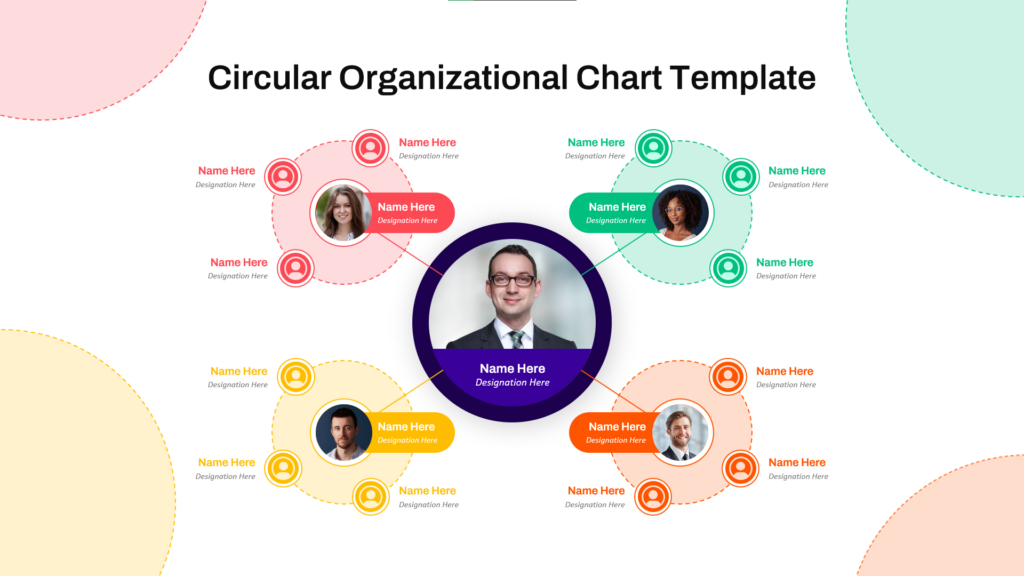
5. Circular Organizational Chart
Unlike traditional top-down structures, a Circular Organizational Chart places leadership at the center with departments arranged around it.
Best For
- Modern businesses
- Collaborative organizations
- Innovation-focused companies
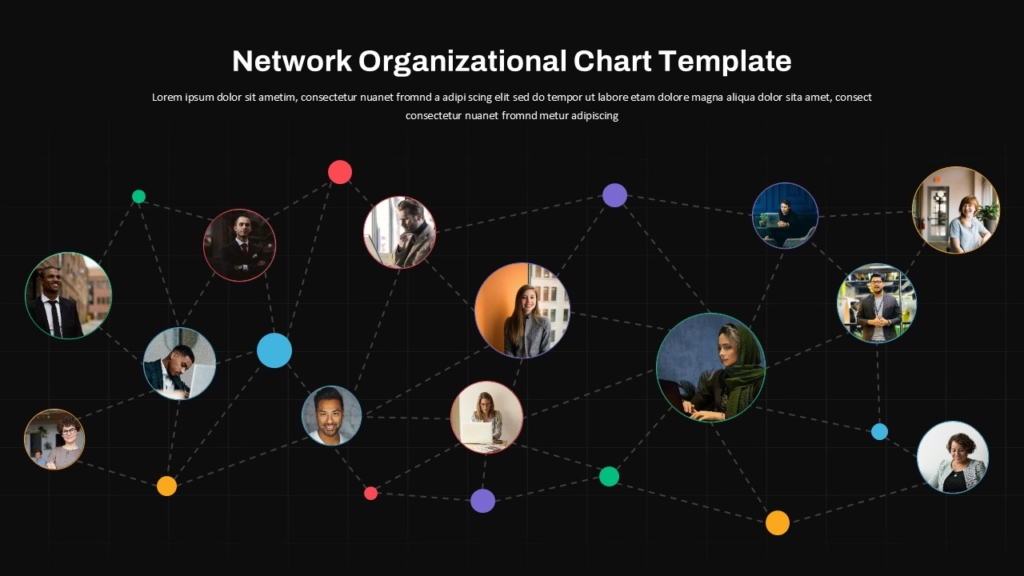
6. Network Organizational Chart
A Network Organizational Chart represents both internal teams and external business relationships such as vendors, contractors, and strategic partners.
Best For
- Outsourcing companies
- Global businesses
- Consulting firms
- Technology companies
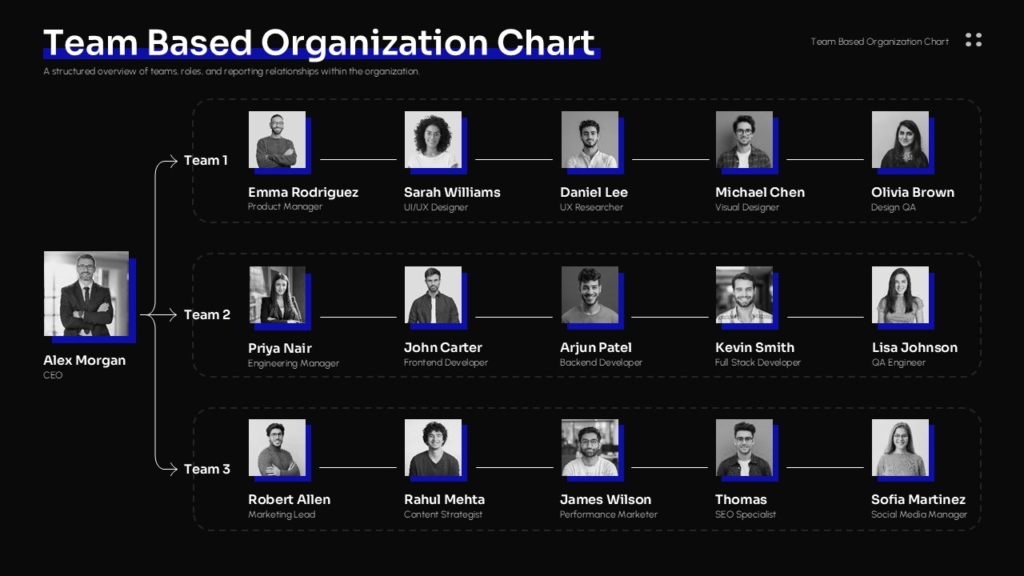
7. Team-Based Organizational Chart
This structure focuses on project teams instead of departments.
Best For
- Agile organizations
- Software companies
- Product development teams
- Marketing agencies
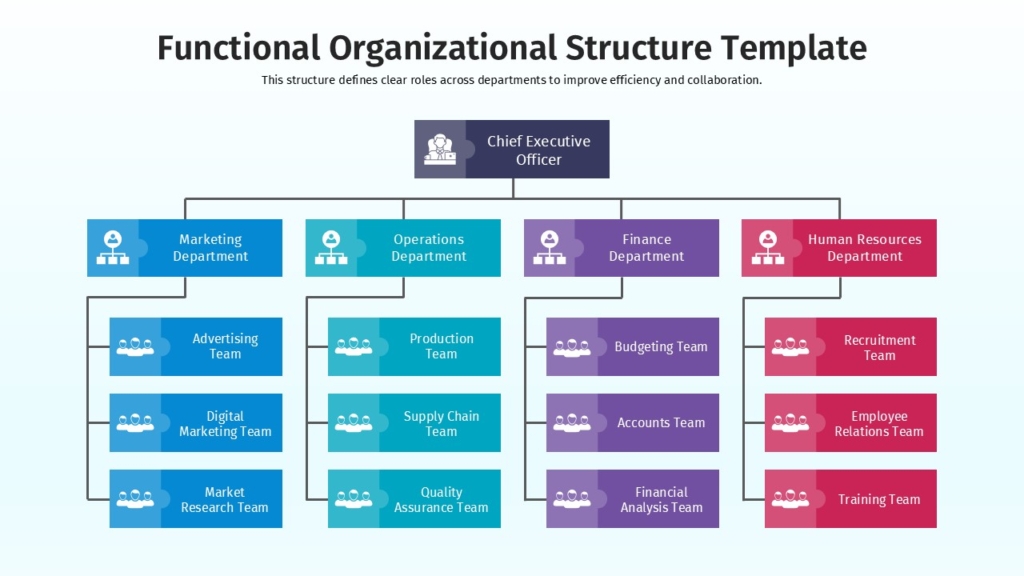
8. Functional Organizational Chart
A Functional Organizational Chart groups employees based on their departments or specialized functions.
Best For
- Medium to large businesses
- Manufacturing companies
- Professional service firms
Why Use PowerPoint and Google Slides for Organizational Charts?
PowerPoint and Google Slides provide flexible tools for building and presenting organizational charts.
Benefits include:
- Fully editable layouts
- Easy drag-and-drop customization
- Cloud collaboration
- Professional presentation designs
- Simple sharing and exporting
- Compatibility across devices
Using ready-made templates helps you create polished organizational charts quickly without advanced design skills.
Conclusion
Choosing the right organizational chart is essential for improving communication, defining reporting relationships, and supporting efficient business operations. Whether you prefer a hierarchical, functional, matrix, flat, divisional, circular, network, or team-based structure, each type offers unique advantages depending on your organization’s size, goals, and workflow. By understanding the strengths of each format and following best design practices, you can create clear, professional organizational charts that enhance collaboration and simplify decision-making.
👉Explore SlideKit’s Organizational Chart Templates today and present your team structure with confidence.