
What Is a Pitch Deck? A Complete Slide-by-Slide Guide for PowerPoint and Google Slides
A pitch deck is a presentation used to communicate a business idea, product, or investment opportunity to potential investors, partners, or stakeholders. It distills months or years of work into 10 to 20 slides designed to answer a single question. Is this worth their time, money, or support?
The format is deceptively simple. A series of slides covering the problem, the solution, the market opportunity, the business model, and the team. But the execution determines whether the deck opens doors or gets ignored. Understanding what a pitch deck actually is, what each slide needs to accomplish, and how to structure the narrative makes the difference between a presentation that moves the conversation forward and one that ends it.
This guide breaks down the pitch deck format slide by slide, explains what makes each section effective, and covers how to create one using PowerPoint or Google Slides.
Pitch Deck Meaning and Purpose
The term “pitch deck” refers specifically to a presentation created to persuade an audience to invest in, partner with, or otherwise support a business or product. It is not a general business presentation. It is not a detailed report. It is a persuasion tool built around a specific ask.
In startup contexts, an investor pitch deck is the most common format. The deck is designed to secure funding by convincing investors that the business has a viable model, a defensible market position, and a team capable of executing the plan. The presentation typically lasts 15 to 20 minutes, with the deck serving as a visual guide rather than a script.
Business pitch decks also exist outside the investment context. Sales teams pitch products to enterprise clients. Marketing agencies pitch campaigns to prospective accounts. Internal teams pitch new initiatives to executive stakeholders. The structure and purpose remain consistent. Communicate the opportunity clearly and make the case for why it deserves support.
The Difference Between a Pitch Deck and a Slide Deck
The terms “pitch deck” and “slide deck” are sometimes used interchangeably, but they are not the same thing.
Slide deck meaning is broader. Any presentation file created in PowerPoint, Google Slides, or Keynote qualifies as a slide deck. A quarterly business review is a slide deck. A training presentation is a slide deck. An internal project update is a slide deck. The term describes the format, not the function.
A pitch deck is a specific type of slide deck with a defined purpose. It exists to persuade. The structure, content, and tone are all optimized around moving the audience from skepticism to interest. Not all slide decks are pitch decks, but all pitch decks are slide decks.
Understanding this distinction matters because it determines how the presentation is structured. A reporting slide deck communicates what happened. A pitch deck communicates what could happen and why it is worth the investment.
The Standard Pitch Deck Structure (Slide by Slide)
Most effective pitch decks follow a similar structure. The exact order can vary depending on the industry or context, but the core components stay consistent. Here is the slide-by-slide breakdown of what a complete pitch deck typically includes.
Slide 1: Title and Hook
The opening slide contains the company or product name, a one-sentence tagline, and optionally a compelling visual or statistic. This slide sets the tone and provides context for everything that follows.
The tagline should communicate what the business does in plain language. Avoid jargon or vague positioning statements. “AI-powered supply chain optimization for e-commerce brands” is clearer than “revolutionizing logistics through intelligent automation.”
Slide 2: The Problem
This is the most important slide in the deck. It defines the pain point, inefficiency, or unmet need that the business exists to solve. If the audience does not believe the problem is real or significant, nothing else in the deck matters.
Strong problem slides quantify the issue. How many people experience this problem? How much does it cost them? What are they doing now that does not work? Concrete details make the problem tangible rather than abstract.
Slide 3: The Solution
The solution slide introduces the product or service at a conceptual level. What does it do? How does it solve the problem described on the previous slide? This is not the place for detailed feature explanations. The goal is to establish that a solution exists and that it addresses the core problem effectively.
A visual demonstration often works better than text. A screenshot, a diagram, or a simple before-and-after comparison communicates the value proposition faster than paragraphs of description.
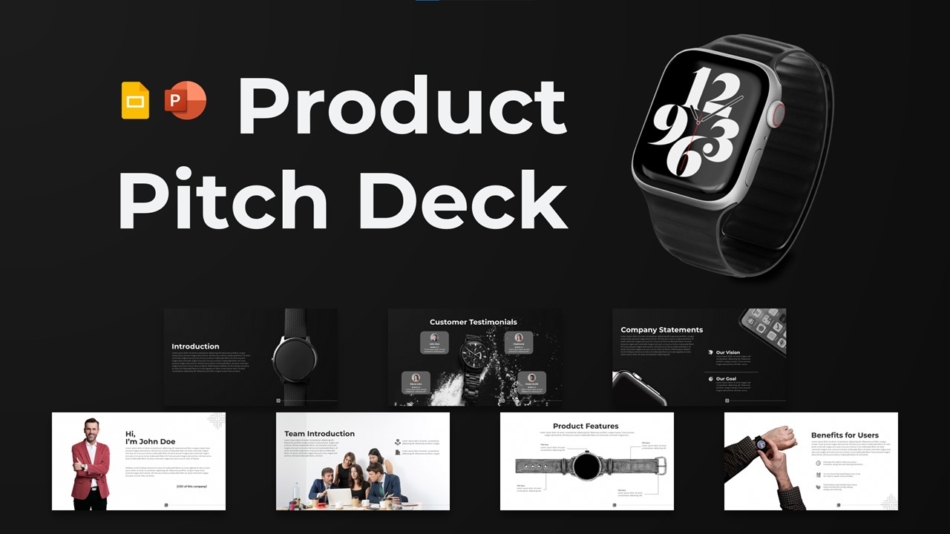
SlideKit’s product pitch deck template provides structured layouts for both problem and solution slides, with visual frameworks designed to communicate value propositions clearly without excessive text.
Slide 4: Market Opportunity
Investors and stakeholders need to understand the size and growth potential of the market. This slide answers a key question. If the business succeeds, how big can it get?
Market opportunity is typically presented in three tiers. Total Addressable Market (TAM) represents the entire market if every potential customer adopted the product. Serviceable Available Market (SAM) represents the segment the business can realistically reach. Serviceable Obtainable Market (SOM) represents the portion the business can capture in the near term.
Numbers should be sourced from credible research and cited. Unsupported market size claims undermine credibility.
Slide 5: Product or Service Detail
After establishing the problem, solution, and market, the deck can dive into more specific product information. What features does the product have? How does it work? What makes it different from alternatives?
This slide should still be high level. Detailed technical specifications belong in an appendix or follow-up materials, not in the main pitch flow. The product overview slide template from SlideKit provides a clean structure for presenting product details without overwhelming the audience with granularity.
Slide 6: Business Model
How does the company make money? Subscription revenue, transaction fees, licensing, advertising? This slide explains the revenue model in simple terms and ideally includes example pricing or unit economics.
For early-stage companies, the business model may still be evolving. In that case, the slide should present the intended model and acknowledge areas that are still being tested or refined. Investors expect some uncertainty at early stages. What they do not accept is a lack of thought about how revenue will eventually be generated.
Slide 7: Traction and Validation
Evidence that the business is working matters more than projections. This slide presents traction metrics. Revenue growth, customer acquisition, user engagement, partnerships, product milestones. Anything that demonstrates forward momentum.
For pre-revenue companies, traction might be pilot customers, letters of intent, waitlist size, or product development milestones. The goal is to show that the business is gaining real-world validation, not just theoretical interest.
Slide 8: Go-to-Market Strategy
How will the business acquire customers? What channels will be used? What does customer acquisition cost look like relative to lifetime value?
This slide should be specific. “Digital marketing” is too vague. “Paid search targeting [specific keyword categories], retargeting via Facebook, and partnership distribution through [specific channel partners]” is actionable and credible.
Slide 9: Competitive Landscape
Every business has competition. Even if the solution is novel, the audience has alternatives. Doing nothing is competition. Using an existing workaround is competition. This slide positions the business relative to those alternatives.
A competitive matrix or positioning chart works well here. Avoid claiming “no competition” because it signals either lack of research or misunderstanding of the market.
Slide 10: Team
Investors invest in people as much as ideas. This slide introduces the founding team and key hires. What relevant experience do they bring? What makes this team capable of executing the plan?
Headshots, names, titles, and a single sentence of relevant background per person. If the team has worked together before, mention it. Prior successful exits or domain expertise in the industry being disrupted add significant credibility.
Slide 11: Financial Projections
A three-to-five year financial projection covering revenue, expenses, and key metrics. Early-stage projections are always wrong, and everyone knows it. The purpose is to demonstrate that the team has thought through the financial model and that the unit economics make sense at scale.
Include a few key assumptions. Growth rate, customer acquisition cost, churn rate, average revenue per user. This shows the financial model is grounded in realistic operational assumptions rather than arbitrary growth curves.
Slide 12: The Ask
What is the business raising? How much capital is needed, what will it be used for, and what milestones will it enable the company to reach?
This slide should be direct. “Raising $2M to achieve product-market fit, hire a full engineering team, and reach $500K ARR within 18 months.” Vague asks like “seeking investment to scale” do not work. Specificity signals preparation.
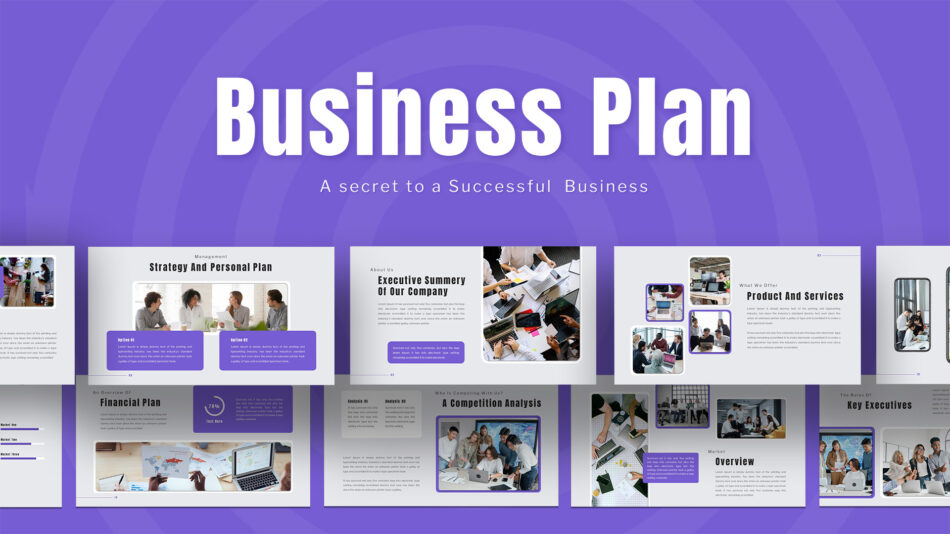
The business plan deck template from SlideKit provides structured layouts for financial and ask slides, ensuring that capital requirements and use of funds are presented clearly.
How to Create a Pitch Deck (Practical Steps)
Building a pitch deck from scratch can take weeks if approached without a clear process. Here is a streamlined method that produces a functional deck faster.
Step 1. Write the narrative first, slides second
Before opening PowerPoint or Google Slides, write out the pitch as a story. What is the problem? How does the solution work? Why now? This narrative becomes the foundation for the slide content. Trying to build slides without a clear narrative produces decks that feel disjointed.
Step 2. Start from a template
A pitch deck template provides the structure, layout, and visual system so the founder can focus entirely on content. Templates also enforce constraints. Limited space per slide forces clarity and prevents overloading any single slide with too much information.
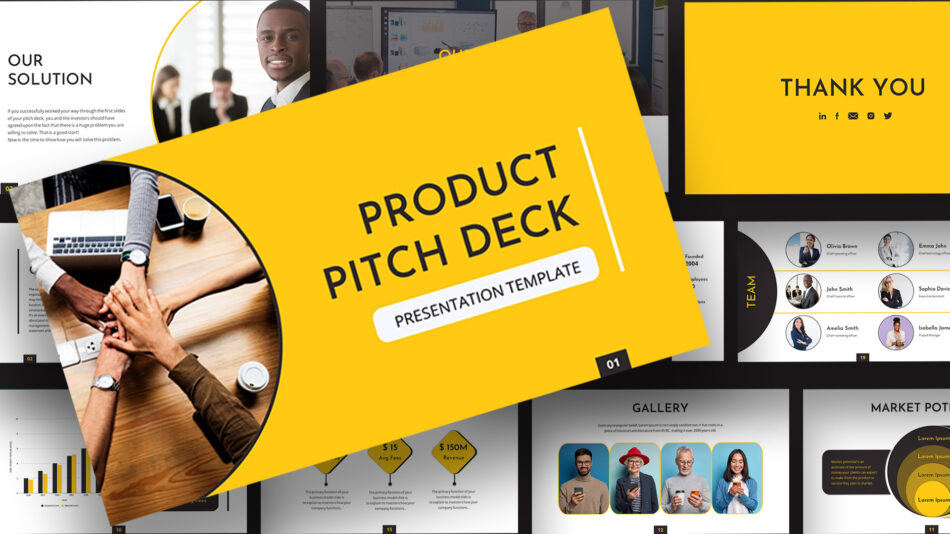
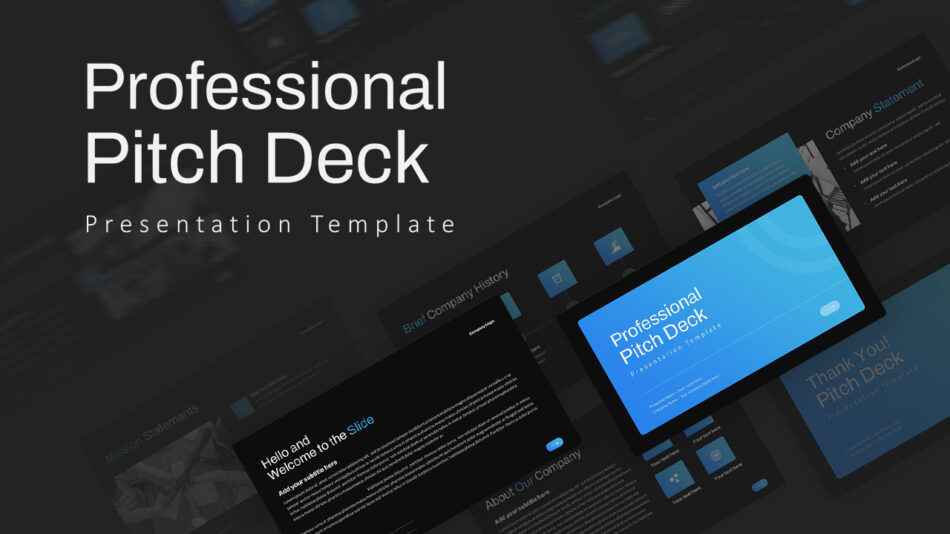
SlideKit’s professional pitch deck template offers complete pitch deck structures with layouts for every standard slide type.
Step 3. Keep each slide to one idea
A slide that tries to communicate multiple points dilutes all of them. One idea per slide. If the content does not fit, it belongs on the next slide or in an appendix.
Step 4. Use visuals over text
Charts, diagrams, product screenshots, and icons communicate faster than text. A well-designed visual can replace three paragraphs. If the slide contains more than 30 words, it probably contains too many.
Step 5. Test the deck on someone unfamiliar with the business
The best test is giving the deck to someone who knows nothing about the business and asking them to explain it back after reading through once. If they cannot articulate the problem, solution, and ask, the deck needs revision.
Pitch Deck Design Consideration
Design quality in a pitch deck is not about making slides look impressive. It is about making information easy to process. A well-designed pitch deck removes friction so the audience focuses on the content rather than struggling to extract meaning from poorly formatted slides.
Typography
Font sizes should be large enough to read on a projector. Titles at 32 points minimum, body text at 18 points minimum. Anything smaller becomes unreadable in presentation environments.
Color and contrast
High contrast between text and background ensures readability. Dark text on light backgrounds or light text on dark backgrounds both work. Mid-tone text on mid-tone backgrounds does not.
Visual consistency
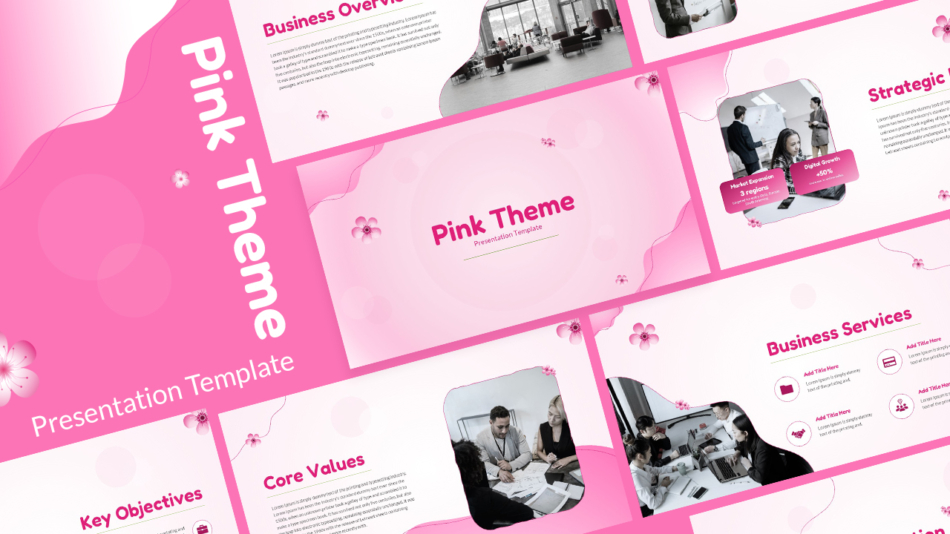
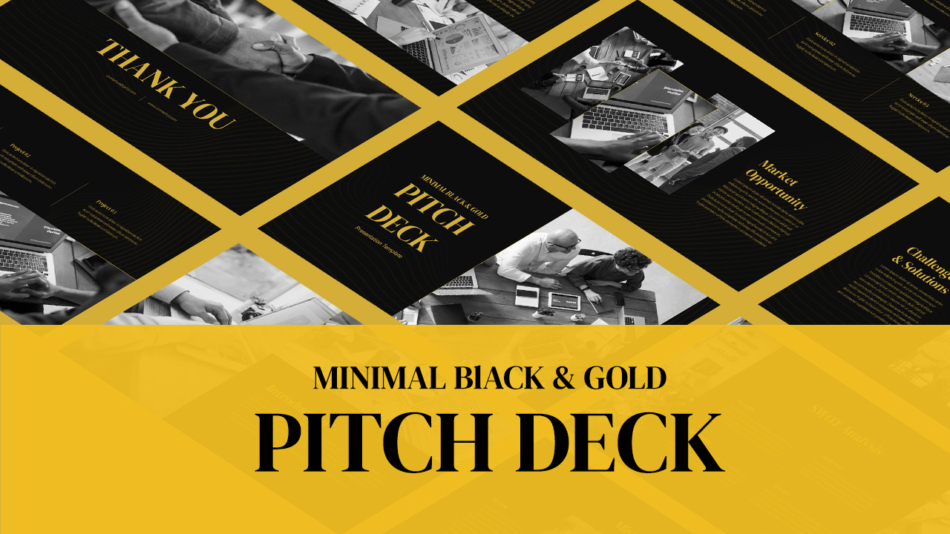
Every slide should feel like part of the same presentation. Consistent fonts, colors, and layout structure throughout the deck. Templates enforce this automatically. Manual slide construction often produces inconsistency.For founders building pitch decks in specific visual contexts, templates like SlideKit’s minimal black and gold PowerPoint pitch deck and pink PowerPoint theme templates offer distinct aesthetic directions while maintaining the structural clarity pitch decks require.
Pitch Deck Design Services vs DIY
Some founders hire pitch deck design services to create custom decks. Others build their own using templates. Both approaches work depending on budget, timeline, and design capability.
When to use pitch deck services
Professional design services make sense when the founder has budget, limited time, and the pitch needs to represent the brand at a high level of visual sophistication. Design agencies typically charge $3,000 to $15,000 for a custom pitch deck. The result is a fully branded, visually distinctive presentation.
When to use a template
For early-stage founders, teams with limited budgets, or anyone who needs to iterate quickly, a well-designed template is the more practical choice. The structural quality is comparable to custom work, and the cost is under $100 in most cases.
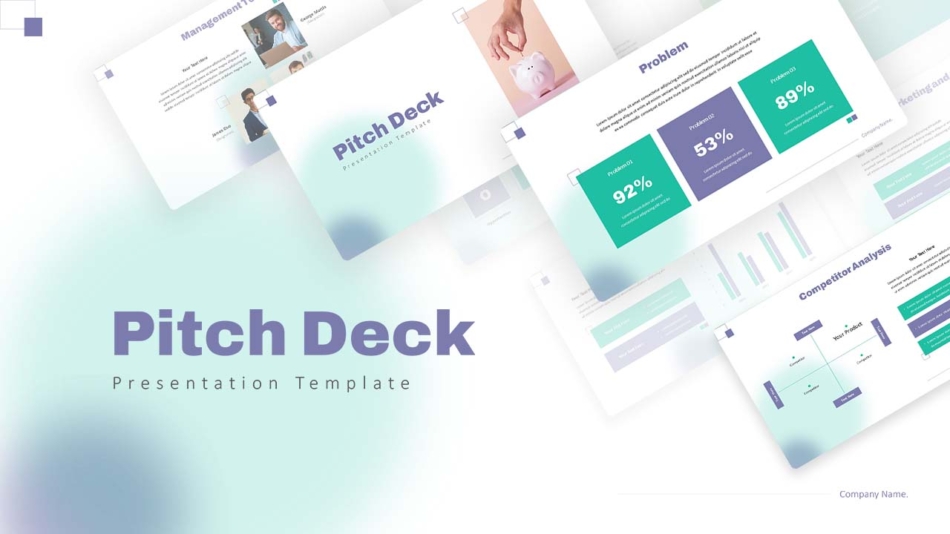
SlideKit’s PowerPoint presentation startup templates provide professionally designed options at template pricing, making them accessible for bootstrapped founders who still need a polished result.
Specialized Pitch Deck Formats
Not all pitch decks follow the investor format. Different contexts require different structures.
Interview pitch decks
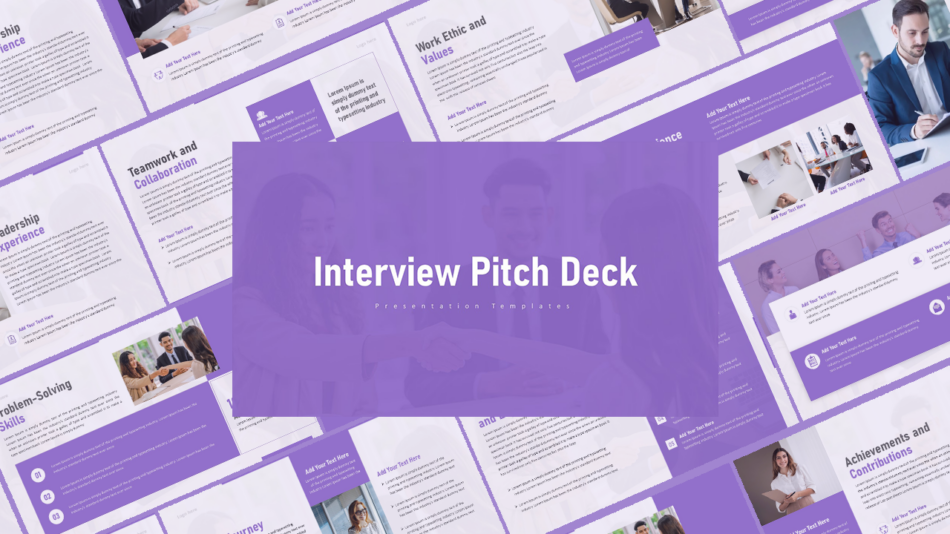
Some roles require candidates to pitch themselves or present case study work during interviews. An interview pitch deck follows a different structure than an investor pitch. It focuses on relevant experience, demonstrated skills, problem-solving approach, and cultural fit.
SlideKit’s interview pitch deck template is designed specifically for this context, with layouts for personal background, case studies, and work samples.
Influencer and agency pitch decks
Marketing agencies and influencers pitching brand partnerships need decks that emphasize audience demographics, engagement metrics, past campaign performance, and creative concepts. The structure differs from a traditional business pitch.
The influencer marketing pitch deck from SlideKit includes layouts for audience analytics, rate cards, and campaign case studies, addressing the specific requirements of brand partnership pitches.

Final Thought
A pitch deck is not a comprehensive explanation of a business. It is a tool designed to start a conversation. The goal is not to close the deal in the presentation. The goal is to communicate enough value, credibility, and opportunity that the audience wants to continue the discussion.
The best pitch decks are clear, concise, and structured around a compelling narrative. They present the problem before the solution. They quantify the market opportunity. They provide evidence of traction. They introduce a capable team. They state the ask directly.
Getting the structure right matters more than making the deck visually impressive. A well-organized deck built from a solid template will outperform a custom-designed deck with poor narrative flow. Start with the right structure, fill it with credible content, and design for clarity rather than decoration. That approach produces pitch decks that actually work.