
What Is a 30-60-90 Day Plan and Why Is It Important?

Starting a new role, leading a new project, or launching a business initiative can be overwhelming without a clear roadmap. Success often depends on setting realistic goals, tracking progress, and maintaining focus during the critical first few months. This is where a 30-60-90 day plan becomes valuable.
A 30-60-90 day plan is a structured framework that breaks goals and activities into three phases covering the first 30, 60, and 90 days. It helps individuals and teams prioritize actions, measure progress, and stay aligned with objectives. Whether you’re a new employee, manager, sales professional, entrepreneur, or project leader, a well-designed 30-60-90 day plan provides a clear path to success.
What Is a 30-60-90 Day Plan?
A 30-60-90 day plan is a strategic planning tool used to outline goals, priorities, and milestones across three distinct periods:
- First 30 Days
- First 60 Days
- First 90 Days
Each phase builds on the previous one, creating a logical progression from learning and planning to execution and results.
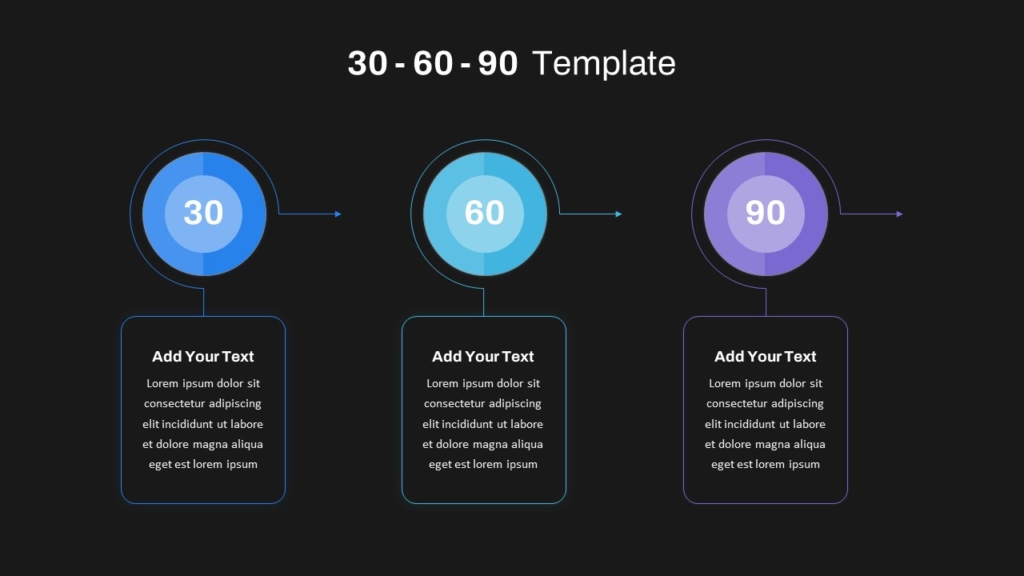
This phased approach helps avoid information overload while ensuring continuous progress.
Why Is a 30-60-90 Day Plan Important?
A 30-60-90 day plan provides structure during periods of transition and change. Instead of working without direction, individuals can focus on clearly defined objectives.
Key benefits include:
- Clear goal setting
- Better time management
- Improved accountability
- Faster onboarding
- Enhanced Communication
The framework ensures that efforts remain aligned with long-term objectives while maintaining short-term momentum.
First 30 Days: Learn and Understand
The first month is typically focused on gathering information, understanding expectations, and building relationships.
Key activities may include:
- Learning company processes
- Understanding team structures
- Reviewing existing projects
Goals : Complete onboarding, Learn key systems and tools, Understand performance expectations.
At this stage, success is measured by understanding rather than execution.
Days 31–60: Implement and Contribute
Once foundational knowledge has been established, the next phase focuses on applying what has been learned.
Key activities may include:
- Taking ownership of tasks
- Contributing to projects
- Solving identified issues
Goals : Complete initial projects, Improve team collaboration, Identify efficiency opportunities.
This phase transitions from observation to active contribution.
Days 61–90: Deliver Results
The final phase emphasizes measurable outcomes and long-term planning.
Key activities include:
- Achieving performance targets
- Implementing improvements
- Presenting results
Goals : Reach performance milestones, Launch new initiatives, Improve key metrics.
By the end of 90 days, individuals should have demonstrated value and established a foundation for continued success.
Common Uses of a 30-60-90 Day Plan
The framework is widely used across industries and roles.
1. New Employee Onboarding
New hires use 30-60-90 day plans to understand expectations and transition into their roles more effectively.
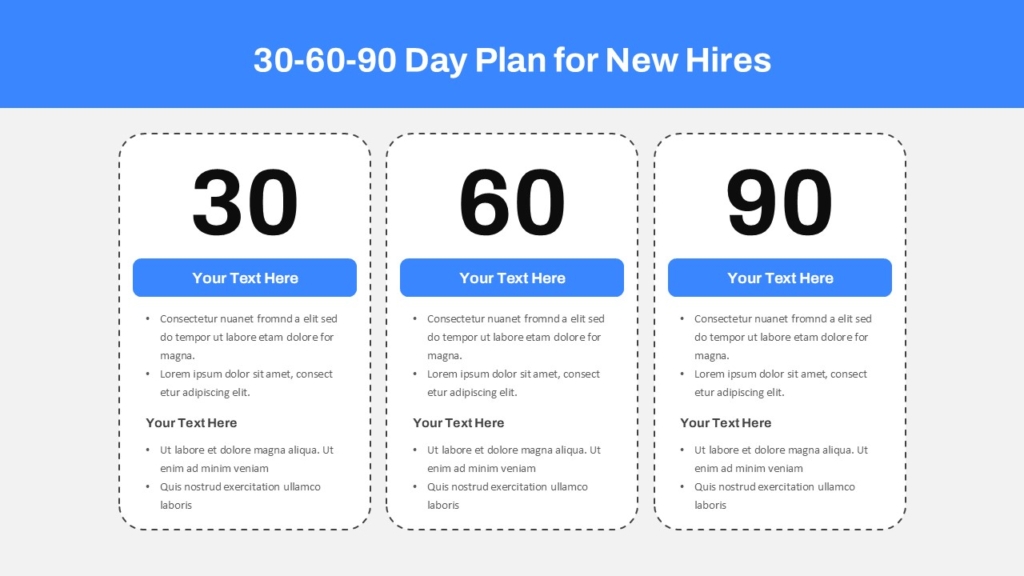
👉Download 30-60-90 day plan Template Now
Benefits: Faster integration, Clear expectations, Better performance tracking
2. Management and Leadership Roles
Managers use these plans when taking over new teams or departments.
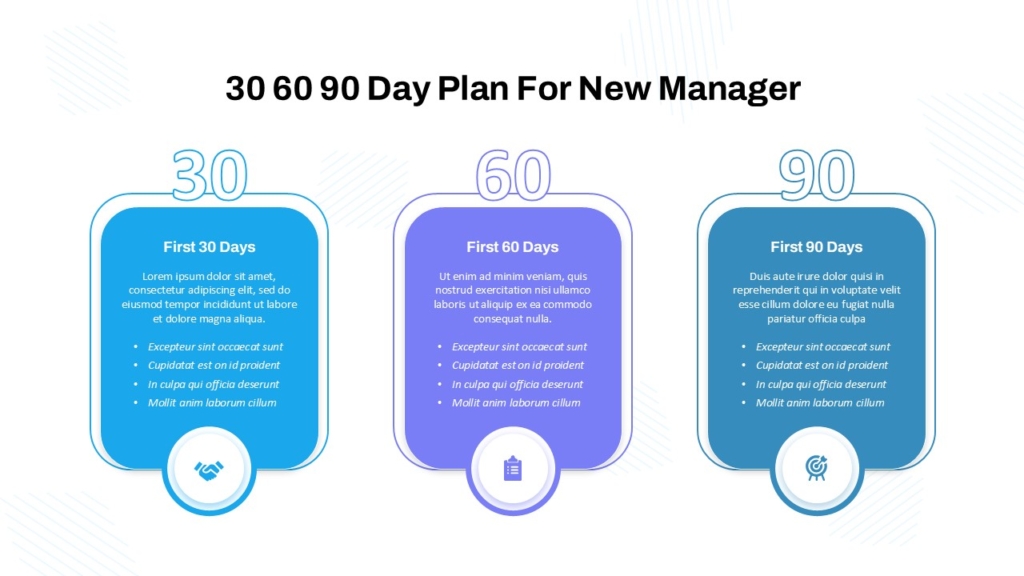
Benefits: Team assessment, Relationship building, Strategic planning
3. Sales Professionals
Sales teams use 30-60-90 day plans to establish targets and monitor progress.
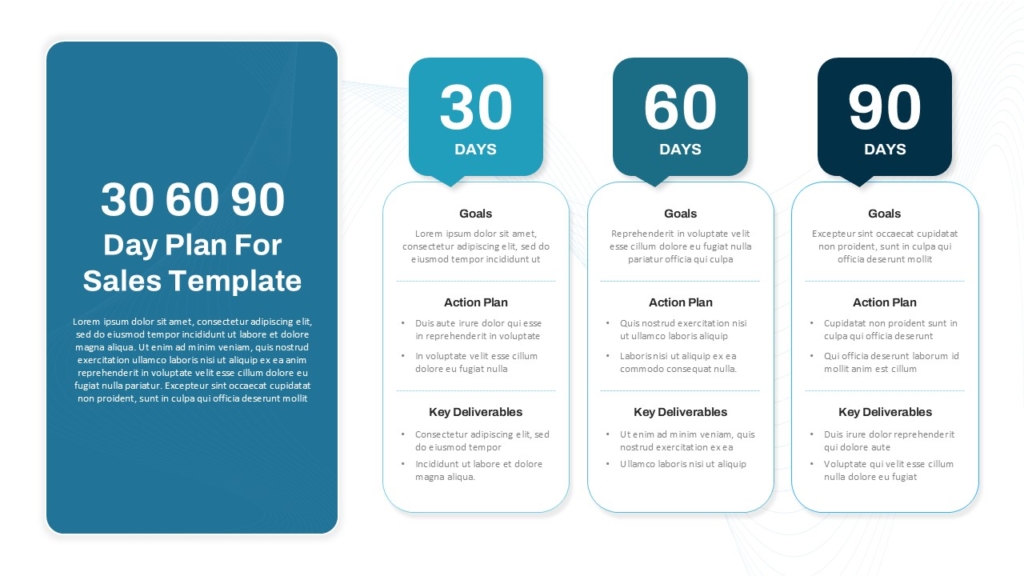
Examples: Pipeline development, Customer outreach, Revenue goals.
How to Create an Effective 30-60-90 Day Plan
A successful plan should be realistic, measurable, and aligned with objectives.
Define Clear Goals
Identify what success looks like at each stage.
Prioritize Key Activities
Focus on the most impactful tasks rather than trying to accomplish everything at once.
Use Measurable Metrics
Track progress using specific indicators such as:
- Revenue targets
- Project milestones
- Customer acquisition
- Performance goals
Set Realistic Expectations
Avoid creating objectives that are difficult to achieve within the available timeframe.
Review Progress Regularly
Assess performance at the end of each phase and make adjustments when necessary.
Common Mistakes to Avoid
- Setting Too Many Goals : Trying to accomplish too much can reduce focus and effectiveness.
- Ignoring Metrics : Without measurable goals, it becomes difficult to evaluate success.
- Lack of Flexibility : Plans should adapt to changing circumstances.
- Poor Communication : Stakeholders should understand expectations and progress.
- Skipping Reviews : Regular evaluations help identify challenges early.
Benefits of Visualizing a 30-60-90 Day Plan
Using diagrams, timelines, and infographic layouts makes plans easier to understand and present.
Visual presentations help:
- Improve communication
- Highlight priorities
- Track milestones
- Engage stakeholders
- Simplify complex information
This is why many professionals use presentation templates to showcase their plans effectively.
Conclusion
A 30-60-90 day plan is one of the most effective frameworks for setting goals, tracking progress, and achieving results during the first three months of a new role, project, or business initiative. By breaking objectives into manageable phases, individuals and teams can focus on learning, contributing, and delivering measurable outcomes with greater clarity and confidence.
If you’re looking for a professional way to present your goals and milestones, explore SlideKit’s 30-60-90 Day Plan Templates for PowerPoint and Google Slides. SlideKit offers visually engaging and easy-to-customize templates that help professionals, managers, sales teams, and business leaders communicate their plans clearly and make a stronger impact in presentations.