
Vision, Mission and Values Presentation Guide
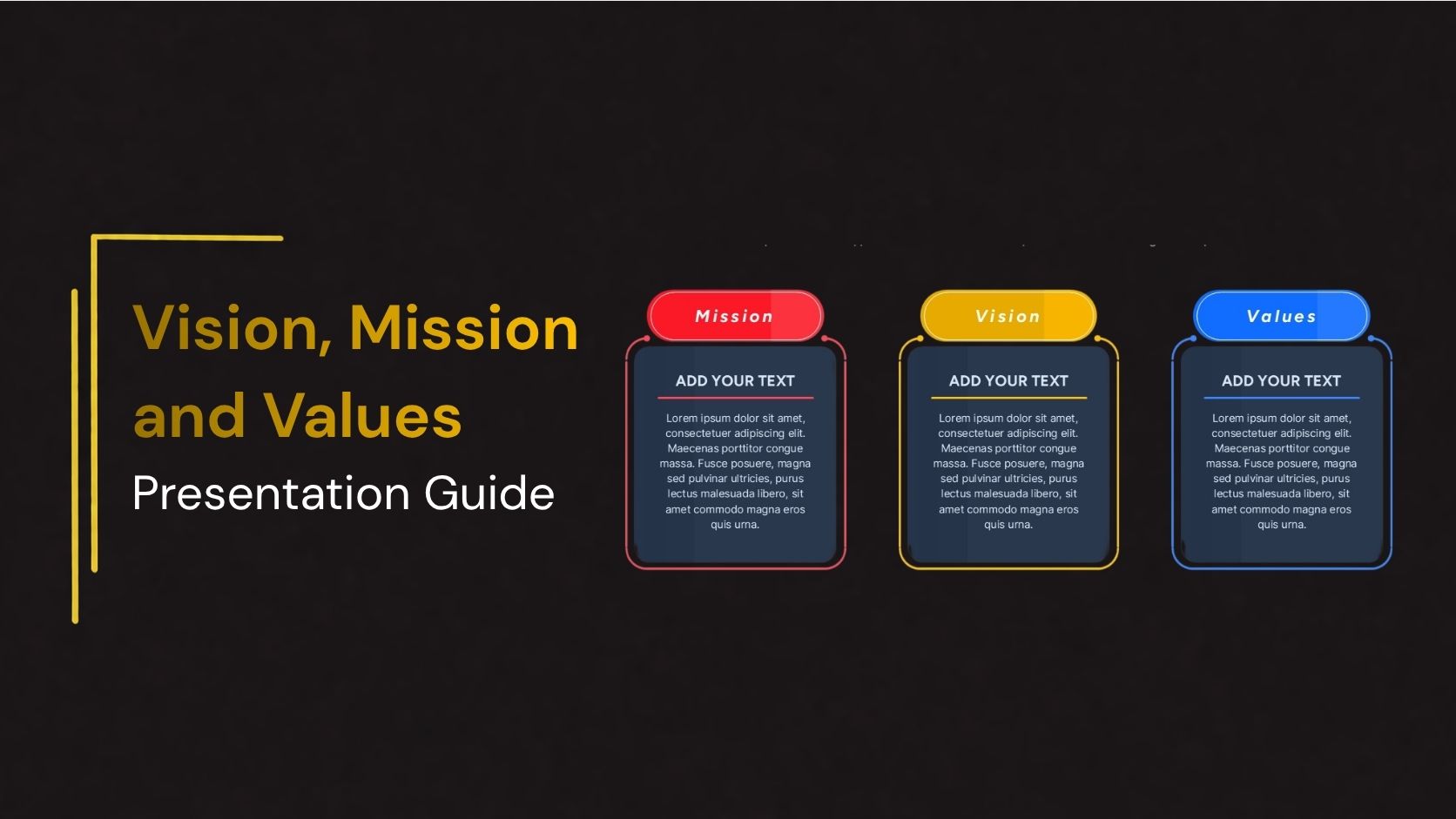
A company’s Vision, Mission, and Values define what it stands for, where it wants to go, and how it intends to get there. Presenting these elements effectively can help employees, customers, investors, and business partners understand an organization’s purpose and direction.
A well-designed Vision, Mission and Values presentation turns these important statements into a clear visual story. Instead of displaying long blocks of corporate language, a presentation can use concise messaging, diagrams, icons, timelines, and real-world examples to explain how the organization’s purpose connects to its strategy and everyday work.
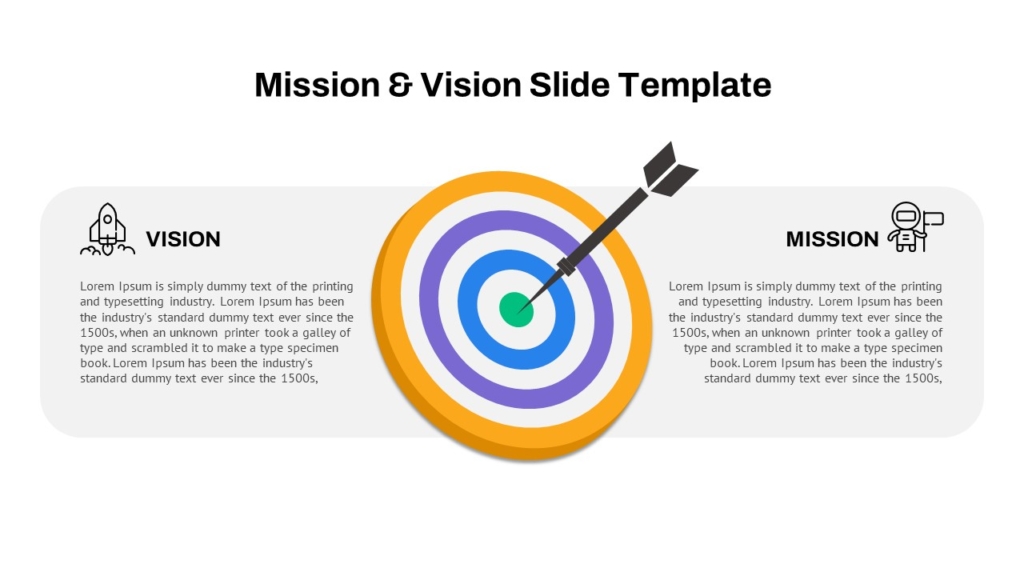
What Are Vision, Mission, and Values?
Although these three concepts are closely related, each serves a different purpose.
Vision
A vision statement describes the future an organization wants to create. It provides a long-term direction and gives teams a shared picture of what success looks like.
For example, a technology company might have a vision focused on making digital services accessible to businesses worldwide.
Mission
A mission statement explains what the organization does, who it serves, and how it creates value. While the vision looks toward the future, the mission focuses more on the organization’s current purpose.
A strong mission statement should be clear, specific, and connected to the company’s core activities.
Values
Company values represent the principles that guide decisions and behaviors. Examples include innovation, integrity, customer focus, collaboration, accountability, and sustainability.
Values help translate the company’s mission and vision into everyday actions.
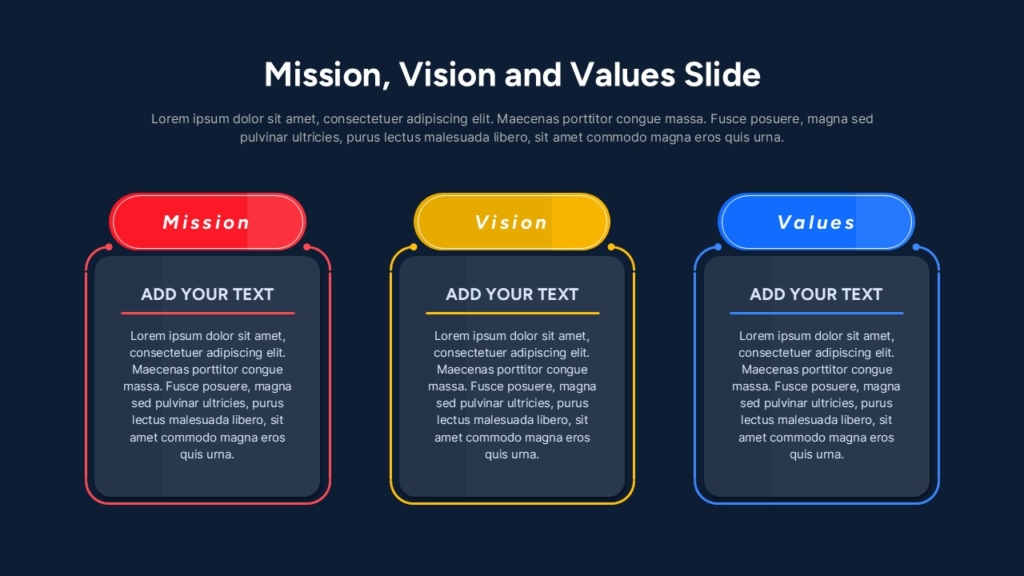
Why Present Vision, Mission, and Values?
A presentation can make these concepts easier to communicate across an organization.
Build Alignment
When employees understand the company’s direction and priorities, they can better connect their individual responsibilities to broader organizational goals.
Strengthen Company Culture
Values become more meaningful when they are connected to real workplace behaviors and decisions.
Support Strategic Planning
Vision and mission statements provide context for business strategies, objectives, and long-term initiatives.
Improve Brand Communication
A clear presentation can help customers, investors, and partners understand what differentiates the organization.
Key Slides to Include :
A professional presentation can follow a simple structure.
1. Introduction
Begin with the company’s purpose and provide a brief overview of what the presentation will cover.

2. Our Vision
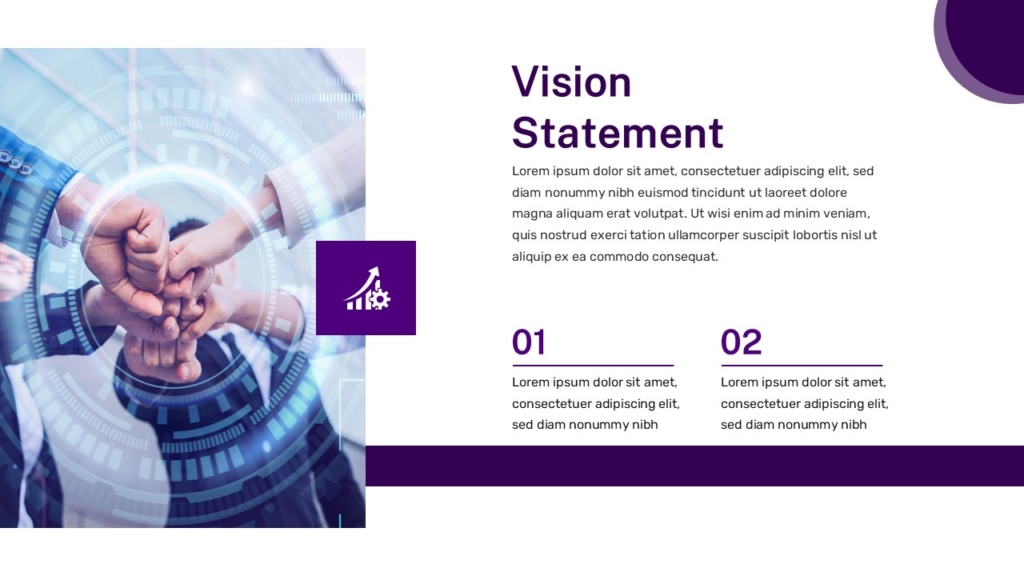
Present the organization’s long-term aspiration using a concise statement and supporting imagery.
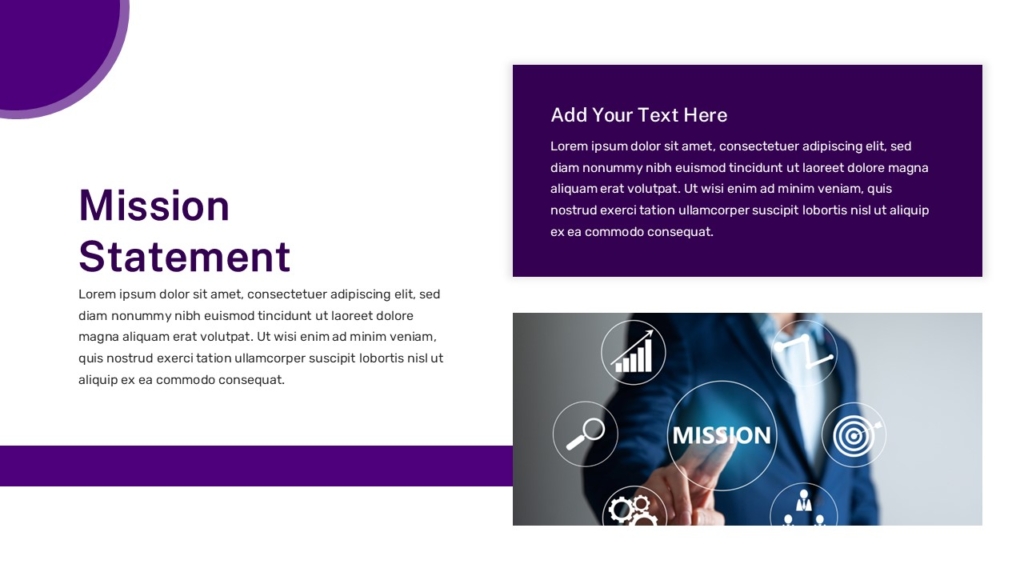
3. Our Mission
Explain what the organization does, who it serves, and the value it provides.
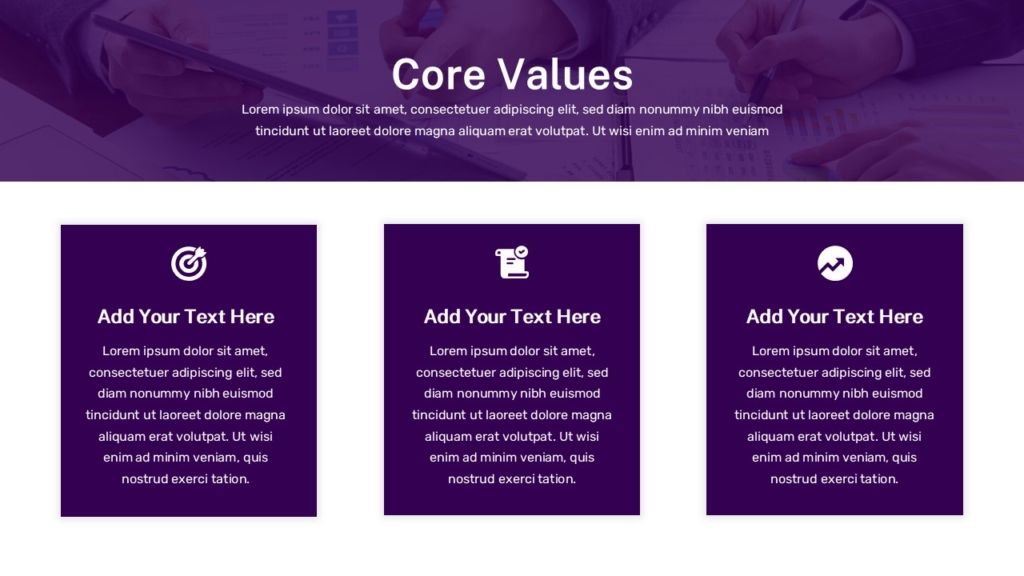
4. Our Core Values
Display the company’s main values using simple visuals. For example, five values could be represented as five connected pillars.
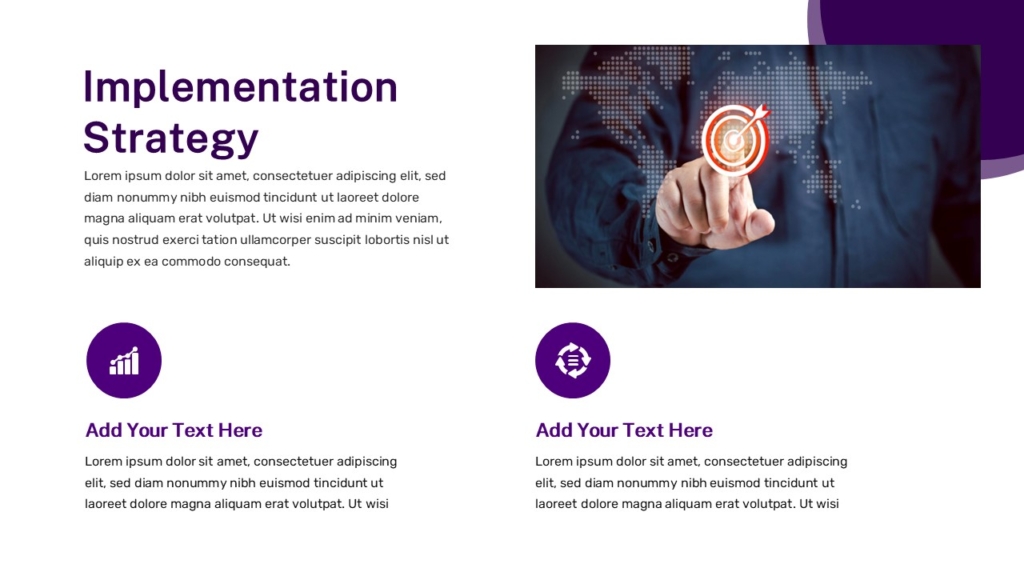
5. Vision-to-Strategy Connection
Demonstrate how the vision influences strategic priorities, goals, and initiatives.
How to Make the Presentation More Engaging
Avoid treating vision, mission, and values as three isolated text-heavy slides. Instead, connect them into one story.
Use visual hierarchy to make the most important statements stand out. Keep supporting text short and use diagrams, icons, photography, or illustrations to reinforce the message.
You can also include real examples of how company values influence customer service, product development, leadership, teamwork, or decision-making.
For larger organizations, consider adding a strategy map that shows the relationship between Vision → Mission → Values → Goals → Actions → Outcomes.
How Templates Can Help
Creating a professional presentation from scratch can take significant time. An editable template provides ready-made layouts for mission statements, vision statements, value pillars, strategy diagrams, timelines, and business frameworks.
PowerPoint and Google Slides templates also make it simple to customize fonts, colors, images, and messaging to match your organization’s brand.
Conclusion
A strong Vision, Mission and Values presentation does more than display corporate statements. It explains what an organization stands for, where it is heading, and how its people can contribute to that direction. By combining concise messaging with visual storytelling, real examples, and strategy-focused diagrams, businesses can make their purpose more memorable and actionable. Whether used for employee onboarding, leadership meetings, company profiles, investor presentations, or strategic planning, a well-structured deck can help create stronger alignment and a more consistent organizational identity.