
RACI Matrix Explained: Roles and Responsibilities
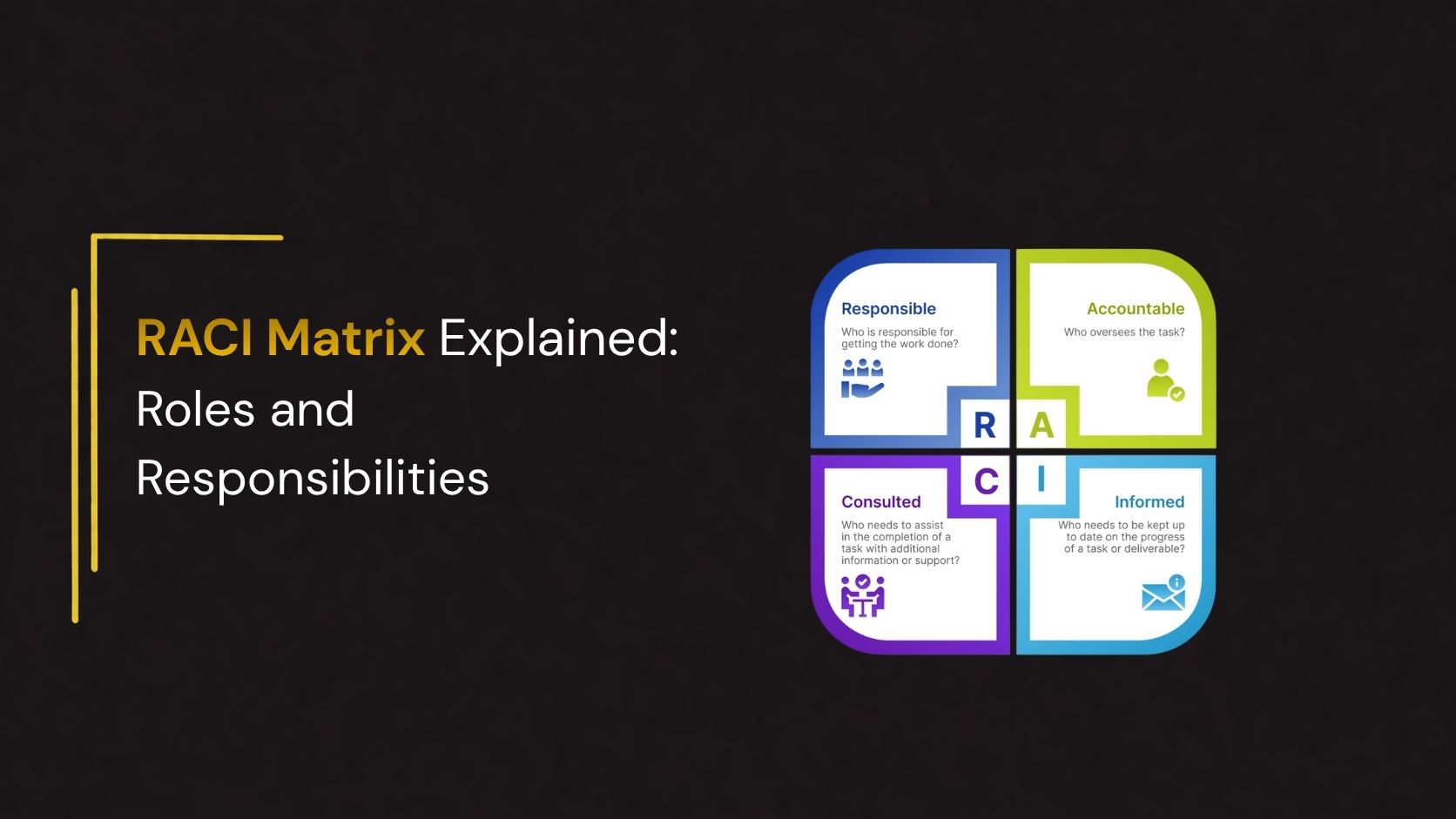
RACI stands for Responsible, Accountable, Consulted, and Informed. These four categories describe how individuals participate in a task, decision, or deliverable.
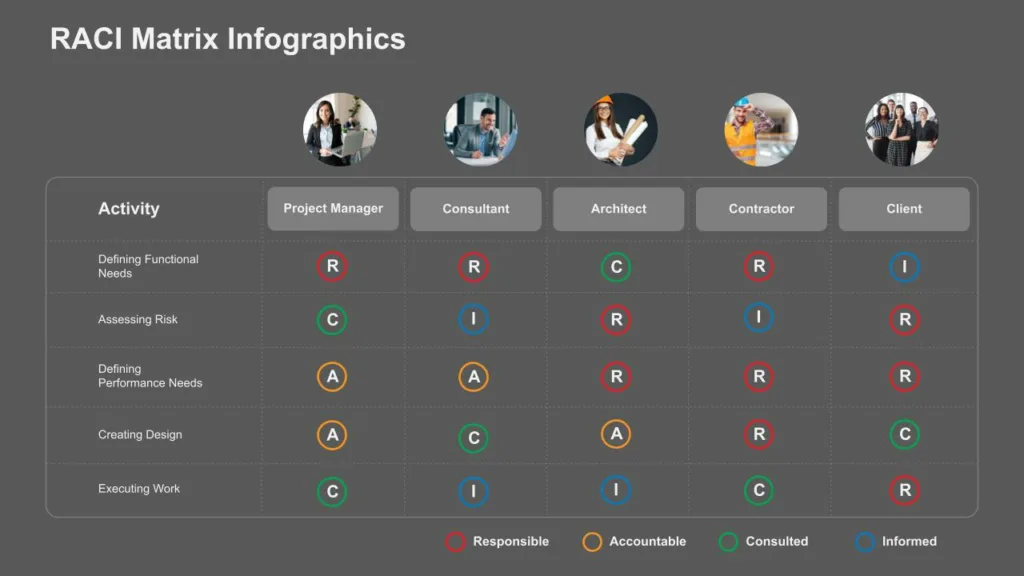
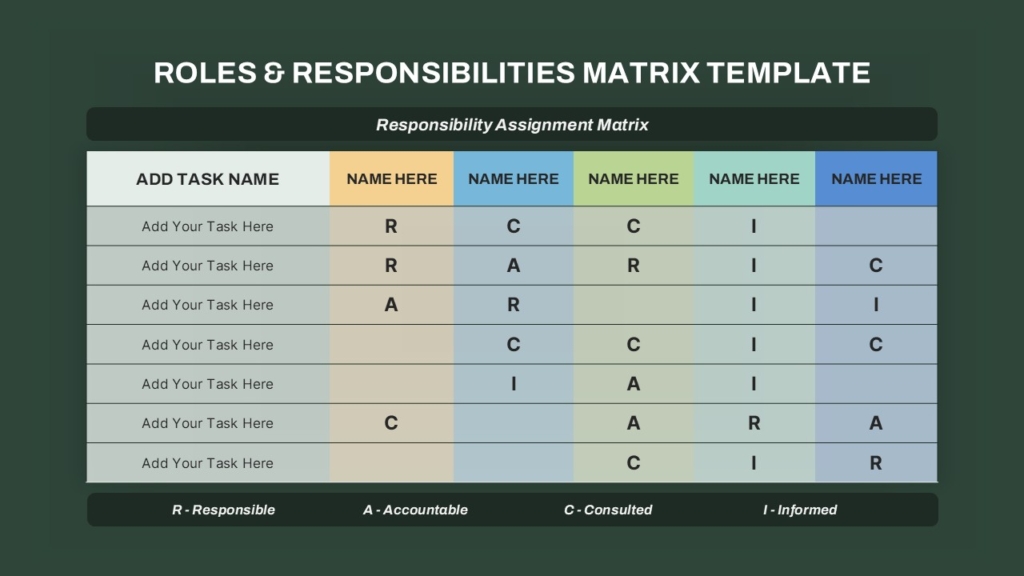
A RACI matrix typically places project tasks in rows and team roles in columns. Each intersection shows how a person or role contributes to that task.
The key distinction is that Responsible means doing the work, while Accountable means owning the outcome. In a small team, one person may perform both roles.
The Four RACI Roles Explained
1. Responsible (R): The Doers
The person or people who carry out the task and produce the deliverable. For example, a designer creates the project presentation.
2. Accountable (A) : The Decision Maker
The person ultimately answerable for the task’s completion and quality, including making or authorizing the final decision where appropriate.
3. The Consulted (C) : Subject Matter Experts
Individuals who provide input, expert guidance, or feedback before a task or decision is finalized. Communication is usually two-way.
4. The Informed (I) : Stakeholders
Task progress, key decisions, and outcomes are communicated to these individuals, who are not directly involved in the work.
Why Is a RACI Matrix Important?
Projects often involve multiple departments, external partners, managers, and specialists. A RACI matrix helps teams establish ownership before these problems affect delivery.
Its main benefits include:
- Clear ownership: Everyone knows who performs each task and who owns the result.
- Fewer communication gaps: Teams understand who needs to be consulted and who simply needs updates.
- Faster decisions: Decision-makers and contributors are identified early.
- Reduced duplication: Team members are less likely to perform overlapping work unnecessarily.
- Better coordination: Cross-functional teams can collaborate with a shared understanding of responsibilities.
How to Create a RACI Matrix
Creating a RACI matrix starts with identifying the work that needs to be completed and the people involved in delivering it. Follow these six steps to build a practical responsibility framework.
- Step 1: Define the Project Scope
Begin by outlining the project’s objectives, deliverables, major activities, and expected outcomes.
- Step 2: List the Tasks and Deliverables
Specific activities make responsibility assignments easier to understand.
- Step 3: Identify the People and Roles Involved
List the roles that contribute to or influence the project. Depending on the project, these may include the project sponsor, project manager, business analyst, designer, developer, finance manager, and external stakeholders.
- Step 4: Assign the RACI Roles
For every task, decide who will perform the work, who owns the outcome, who needs to provide input, and who needs updates.
- Review the Matrix With Stakeholders
Share the draft with the project team and confirm that everyone understands their assignments.
How to Create a RACI Matrix in PowerPoint or Google Slides
PowerPoint and Google Slides are ideal for presenting a RACI matrix during project kick-offs, planning meetings, stakeholder reviews, and governance discussions.
Follow these steps to build one:
- Create a table: Put project tasks in the first column and team roles across the top.
- Enter RACI assignments: Add R, A, C, or I to each relevant cell.
- Apply visual formatting: Use consistent colors or text formatting to distinguish the four roles.
- Add a legend: Explain what each letter means.
- Check readability: Keep task descriptions concise and avoid overcrowding the slide.
- Review ownership: Confirm that each task has a clear Responsible role and one primary Accountable owner.
- Share the matrix: Use it as a reference during meetings and project updates.
For a small project, one slide may be sufficient. For a larger initiative, split the matrix into sections such as planning, execution, testing, and launch rather than shrinking the text until it becomes difficult to read.
👉If you need a ready-made visual structure, browse business PowerPoint templates for editable layouts that can be adapted to project responsibilities, workflows, and planning frameworks.
Conclusion
A RACI matrix is a practical way to clarify roles and responsibilities, especially when a project involves multiple teams, stakeholders, and decision-makers. By defining who is Responsible, Accountable, Consulted, and Informed, organizations can reduce confusion, improve coordination, and make ownership easier to understand.
To create an effective RACI matrix, start with clearly defined tasks, identify the people involved, assign roles consistently, and review the result with stakeholders. Keep the matrix updated as the project evolves, and use it alongside your project plan, communication processes, and governance arrangements.