
PESTLE vs SWOT Analysis: What’s the Difference?
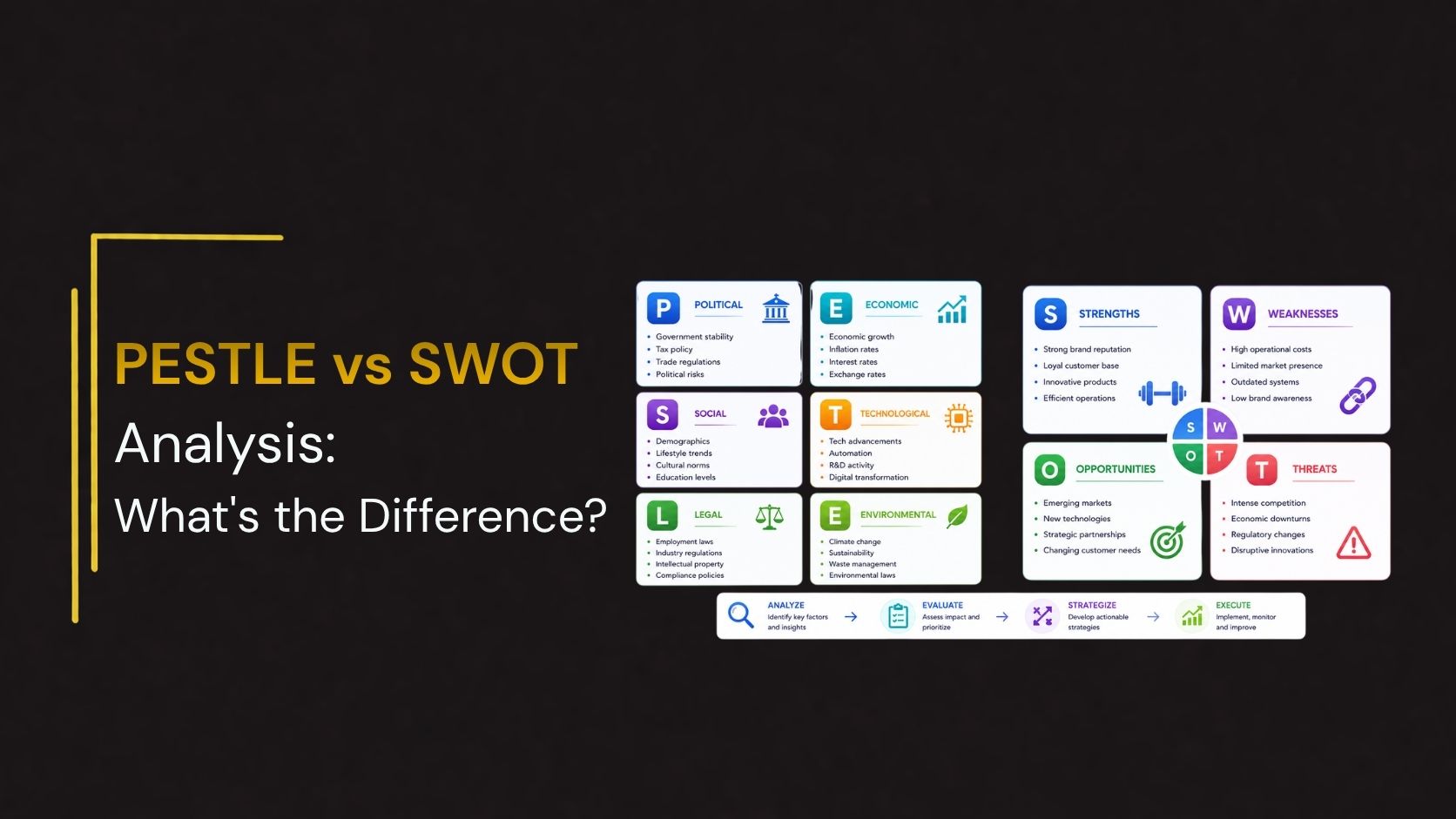
Businesses operate in increasingly complex environments where strategic decisions require a clear understanding of both internal capabilities and external influences. Two of the most widely used strategic planning frameworks are PESTLE Analysis and SWOT Analysis. While both tools help organizations assess their business environment and support decision-making, they serve different purposes and provide different insights.
Understanding the differences between PESTLE and SWOT analysis can help business leaders, entrepreneurs, consultants, and students choose the right framework for planning, market research, risk assessment, and growth strategies.
In this article, we’ll look at what each framework is, how they differ, when they must be used, and how they might work together to help you make better choices.
What Is PESTLE Analysis?
PESTLE Analysis is a strategic framework used to evaluate external macro-environmental factors that may impact a business or industry.
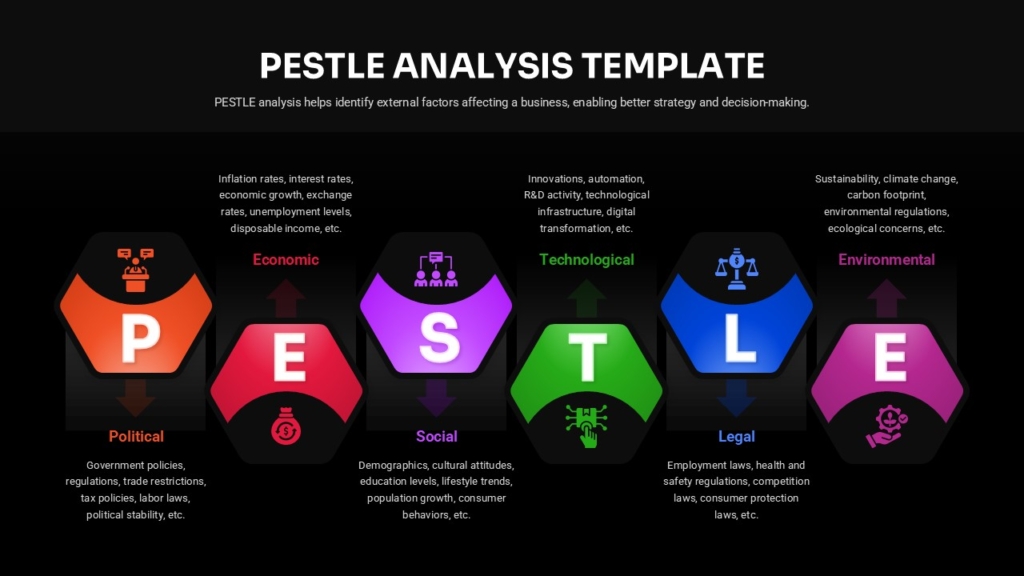
PESTLE stands for:
- Political
- Economic
- Social
- Technological
- Legal
- Environmental
The purpose of a PESTLE analysis is to identify macro-environmental forces that may create opportunities or threats for a business.
Political Factors
Political influences include:
Government policies, Tax regulations, Trade restrictions, Political stability, Labor laws.
Economic Factors
Economic conditions affect business performance and consumer spending.
Examples include:
Inflation rates, Interest rates,Economic growth,Unemployment levels,Exchange rates.
A recession can reduce consumer demand and impact business revenue.
Social Factors
Social trends influence customer behavior and market demand.
Examples include:
Population growth,Lifestyle changes, Consumer preferences, Education levels, Cultural trends.
Businesses often adjust products and services based on changing consumer expectations.
Technological Factors
Technology continues to reshape industries and competitive landscapes.
Examples include:
Artificial intelligence, Automation, Digital transformation, Software innovation, Research and development.
Companies that adapt quickly to technological changes often gain competitive advantages.
Legal Factors
Legal considerations include regulations that businesses must follow.
Examples include:
Employment laws, Data privacy regulations, Industry compliance standards, Intellectual property protection, Consumer protection laws.
Ignoring legal requirements can lead to financial and reputational risks.
Environmental Factors
Environmental issues have become increasingly important for organizations.
Examples include:
Sustainability initiatives, Climate change regulations, Carbon emissions standards, Waste management requirements, Renewable energy adoption.
Businesses must consider environmental responsibilities and stakeholder expectations.
Benefits of PESTLE Analysis
PESTLE analysis helps organizations:
- Understand market conditions
- Anticipate external changes
- Identify emerging trends
- Reduce strategic risk
- Support long-term planning
- Improve decision-making
It is especially valuable for organizations operating in rapidly changing industries.
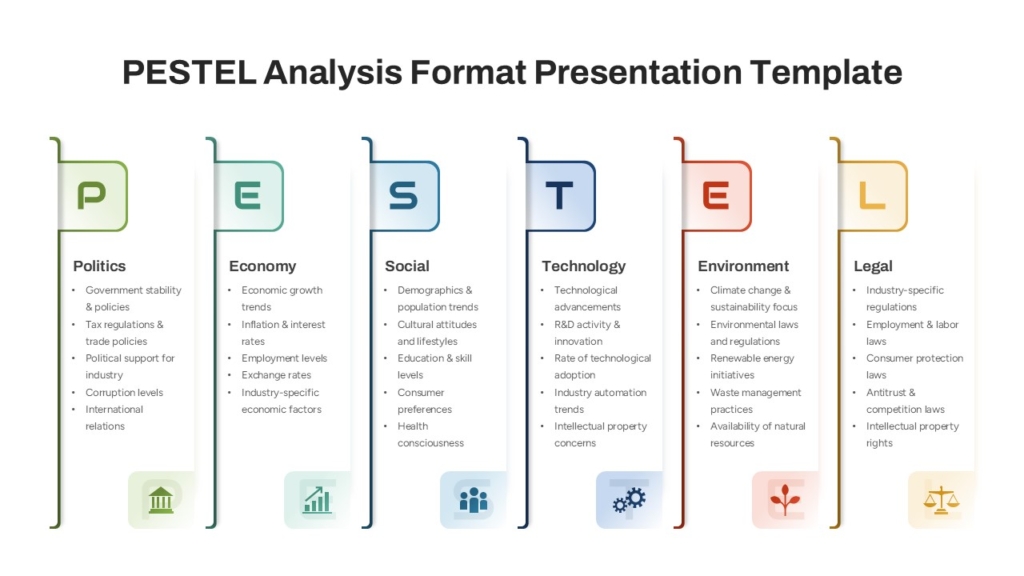
👉Explore PESTEL Analysis template on SlideKit
What Is SWOT Analysis?
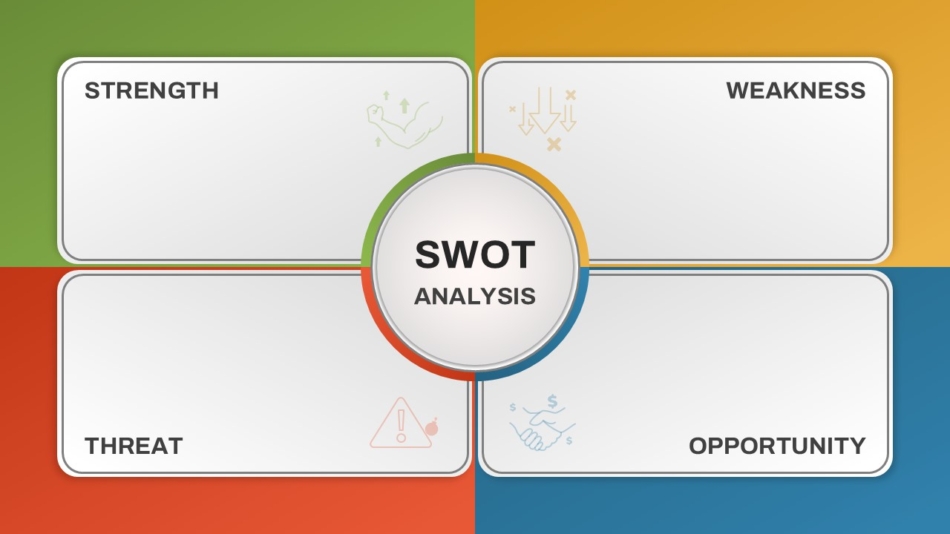
SWOT Analysis is a strategic planning framework used to evaluate both internal and external factors affecting an organization.
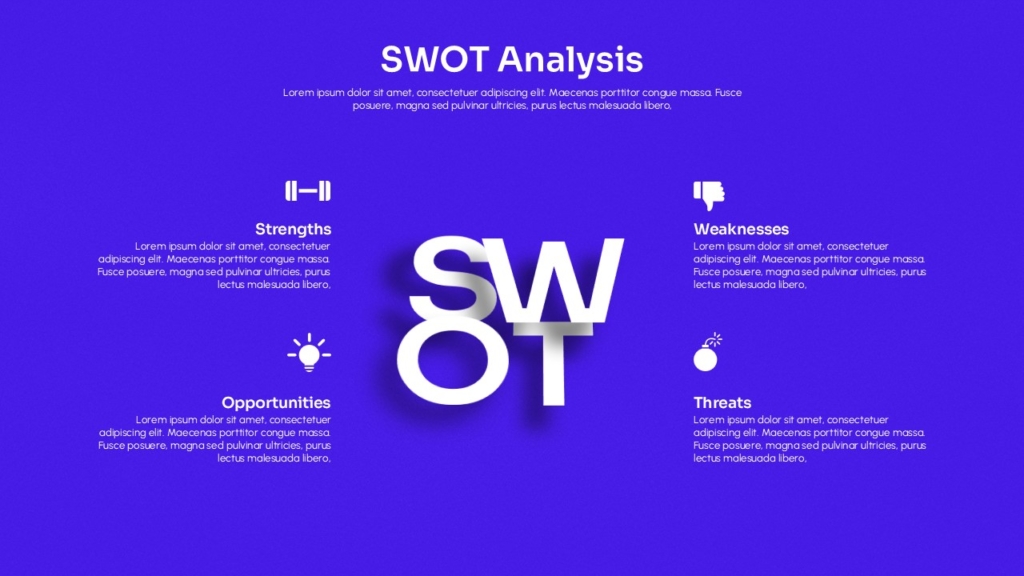
SWOT stands for:
- Strengths
- Weaknesses
- Opportunities
- Threats
Unlike PESTLE, SWOT focuses on both what happens inside the organization and what happens outside of it.
Strengths
Strengths represent internal advantages that help an organization succeed.
Examples include:
- Strong brand reputation
- Skilled workforce
- Proprietary technology
- Loyal customer base
- Financial stability
Weaknesses
Weaknesses are internal limitations that may hinder growth or performance.
Examples include:
- Limited resources
- Outdated systems
- Lack of expertise
- High operational costs
- Weak market presence
Opportunities
Opportunities are external conditions that can benefit the organization.
Examples include:
- Emerging markets
- Industry growth
- New technologies
- Strategic partnerships
- Regulatory changes
Threats
Threats are external factors that could negatively affect the organization.
Examples include:
- New competitors
- Economic downturns
- Changing regulations
- Supply chain disruptions
- Market saturation
SWOT provides a balanced view of where an organization currently stands and what challenges or opportunities lie ahead.
👉Explore SWOT Analysis template on SlideKit
Benefits of SWOT Analysis
SWOT analysis provides several advantages:
- Easy to understand and implement
- Supports strategic decision-making
- Highlights competitive advantages
- Identifies improvement opportunities
- Encourages balanced evaluation
- Helps prioritize business initiatives
Its simplicity makes it one of the most widely used strategic frameworks worldwide.
Can PESTLE and SWOT Be Used Together?
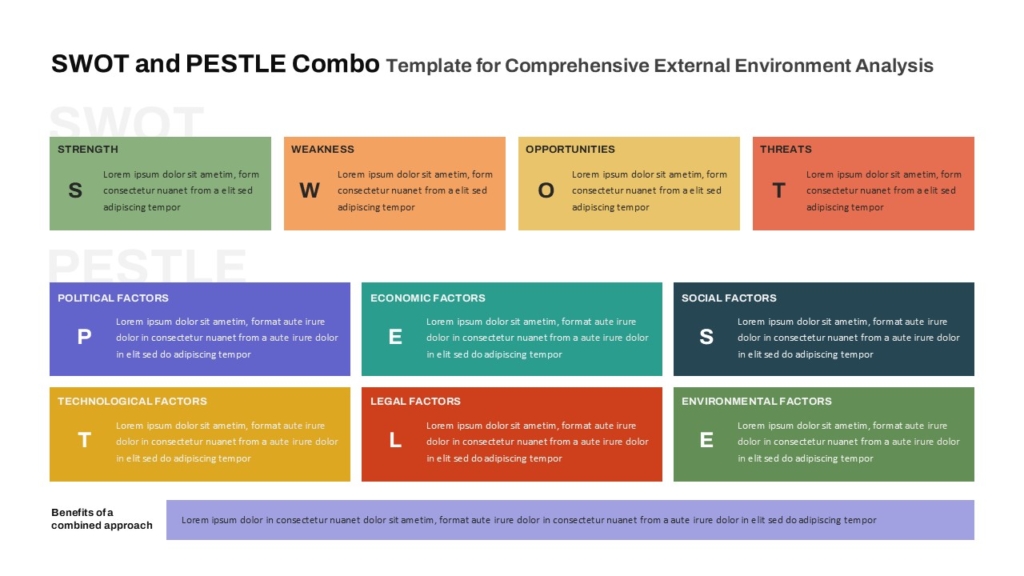
In fact, many organizations combine PESTLE and SWOT analysis to gain a more comprehensive understanding of their environment.
Both PESTLE and SWOT analysis are valuable strategic planning tools, but they serve different purposes. PESTLE focuses on understanding external environmental factors that influence businesses, while SWOT provides a broader assessment of both internal capabilities and external opportunities and threats. Organizations that understand these differences can choose the right framework based on their objectives and planning needs.
Create Professional Strategy Presentations with SlideKit
Need to present your SWOT Analysis, PESTLE Analysis, market research, or strategic planning framework professionally?
SlideKit offers a wide collection of Strategy PowerPoint Templates and Google Slides Themes designed for business planning, competitive analysis, risk assessment, consulting presentations, and executive reporting. With fully editable layouts and modern infographic designs, SlideKit helps you transform complex strategic insights into engaging presentations.