
How to Present a Digital Transformation Strategy
Digital transformation is about more than adopting new technology. It involves changing how an organization operates, serves customers, manages information, and delivers business value. To make these changes successful, businesses need a clear strategy that connects technology investments with measurable outcomes.
A digital transformation strategy presentation helps communicate that plan to executives, department leaders, employees, and other stakeholders. It explains why change is necessary, what the organization wants to achieve, which initiatives deserve priority, and how progress will be measured.
However, presenting a digital transformation strategy can be challenging. Technical details, competing priorities, investment requirements, and organizational risks can make the message difficult to communicate. A well-structured presentation helps simplify these complexities and gives stakeholders a shared understanding of the transformation journey.
In this guide, you will learn how to present a digital transformation strategy, which slides to include, how to visualize complex information, and how to communicate your roadmap, investment requirements, and expected outcomes effectively.
What Is a Digital Transformation Strategy Presentation?
A digital transformation strategy presentation is a structured visual explanation of how an organization plans to use digital capabilities to improve business performance, customer experiences, and operational processes.
It brings together the business case for change, the current state of the organization, the desired future state, strategic initiatives, technology priorities, implementation timelines, and performance measures.
The main objective is to connect the organization’s business goals with the people, processes, data, and technologies needed to achieve them.
Why Is a Digital Transformation Strategy Presentation Important?
Digital transformation initiatives often involve multiple departments, substantial investments, and changes to established working practices. A clear presentation helps stakeholders understand how these elements fit together.
1. Connect Technology Investments With Business Goals
Technology decisions should support a defined business need. A presentation helps explain whether the objective is to reduce operating costs, improve customer service, increase productivity, strengthen data capabilities, or support new business models.
2. Establish a Shared Transformation Vision
Different departments may have different expectations about digital transformation. A structured presentation communicates the desired future state and explains how individual initiatives contribute to that vision.
3. Make Investment Decisions Easier
Executives need to understand the expected benefits, costs, dependencies, and risks of a transformation program. A presentation provides a structured way to compare initiatives, prioritize investments, and explain the reasoning behind resource allocation.
Understanding the Digital Transformation Framework
A digital transformation framework provides a structured approach to understanding how an organization can move from its current operating state to a more digitally capable, connected, and customer-focused business. It connects business objectives with technology adoption, operational improvements, organizational change, and measurable outcomes.
The framework below illustrates how organizations can evaluate their current digital capabilities, envision a future state, develop transformation initiatives, enable implementation, and assess the resulting impact.
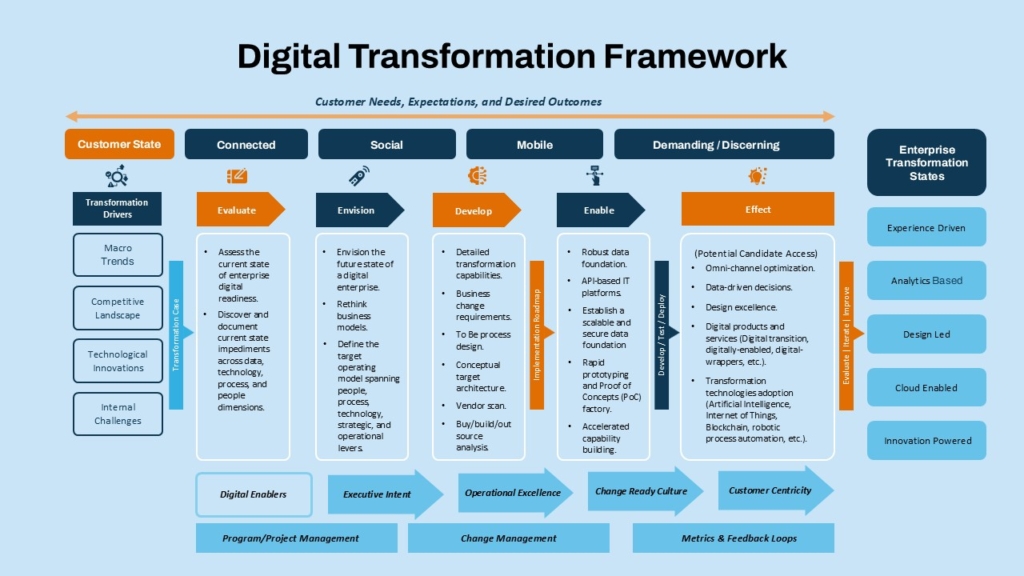
Digital Transformation Framework: Key Components
The framework highlights several important elements of a successful digital transformation strategy:
- Transformation drivers: Macro trends, competitive pressures, technological innovations, and internal challenges that create the need for change.
- Evaluate: Assess the organization’s current digital readiness, document existing limitations, and identify gaps across technology, processes, data, and people.
- Envision: Define the desired future state, rethink business models, and establish a target operating model.
- Develop: Identify transformation capabilities, business change requirements, process improvements, and the target technology architecture.
- Enable: Establish the data foundations, IT platforms, prototyping capabilities, and organizational readiness needed to implement the strategy.
- Effect: Translate the transformation into business outcomes through improved customer experiences, data-driven decisions, digital services, and technology adoption.
The framework also emphasizes supporting capabilities such as executive intent, operational excellence, change-ready culture, customer centricity, project management, change management, and performance measurement.
When presenting this framework to stakeholders, explain the process as a sequence rather than treating every component as a separate initiative.
Digital Transformation Roadmap: From Assessment to Sustainability
A digital transformation roadmap translates a strategic vision into a sequence of practical steps. It helps organizations understand what needs to happen first, how initiatives will progress, and how digital improvements can be sustained over time.
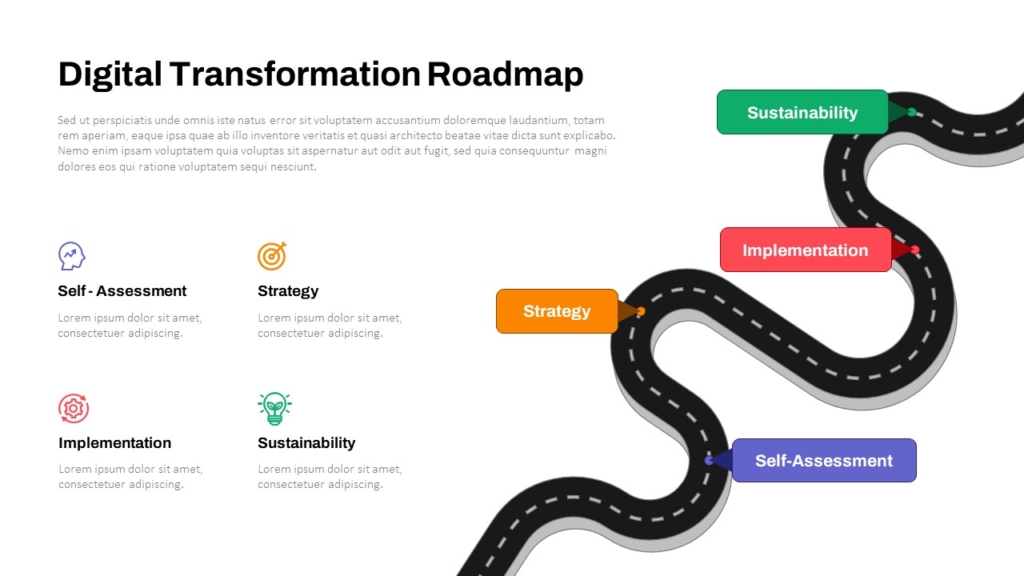
A useful roadmap can be organized into four stages: self-assessment, strategy, implementation, and sustainability. Each stage builds on the previous one, helping businesses move from understanding their current capabilities to implementing improvements and maintaining long-term progress.
- Self-Assessment : This assessment establishes a baseline for measuring progress and helps teams prioritize the most important transformation opportunities.
- Strategy : Use the assessment findings to define the transformation vision, business objectives, and priority initiatives.
- Implementation : Translate the strategy into an actionable implementation plan. Organize initiatives into phases, assign responsibilities, establish milestones, and manage dependencies across departments.
- Sustainability : Establish regular performance reviews, track relevant KPIs, maintain appropriate governance, and identify opportunities for continuous improvement. This helps ensure that transformation efforts deliver lasting business value.
Conclusion
Presenting a digital transformation strategy effectively requires more than explaining new technologies. It involves showing how the organization will move from its current state to a clearly defined future, why the change matters, and how success will be measured.
Start with the business case, assess current capabilities, establish a practical vision, and prioritize the initiatives that support the organization’s objectives. Build a realistic roadmap, account for people and process changes, explain the investment and risks, and define measurable outcomes.
Finally, use a clear presentation structure and relevant visuals to help stakeholders understand the strategy and make informed decisions.
Use an Editable Presentation Template
Building every slide from scratch can take time away from strategy development and stakeholder preparation. An editable PowerPoint template provides a starting structure for maturity assessments, strategic pillars, technology diagrams, investment summaries, and transformation roadmaps.
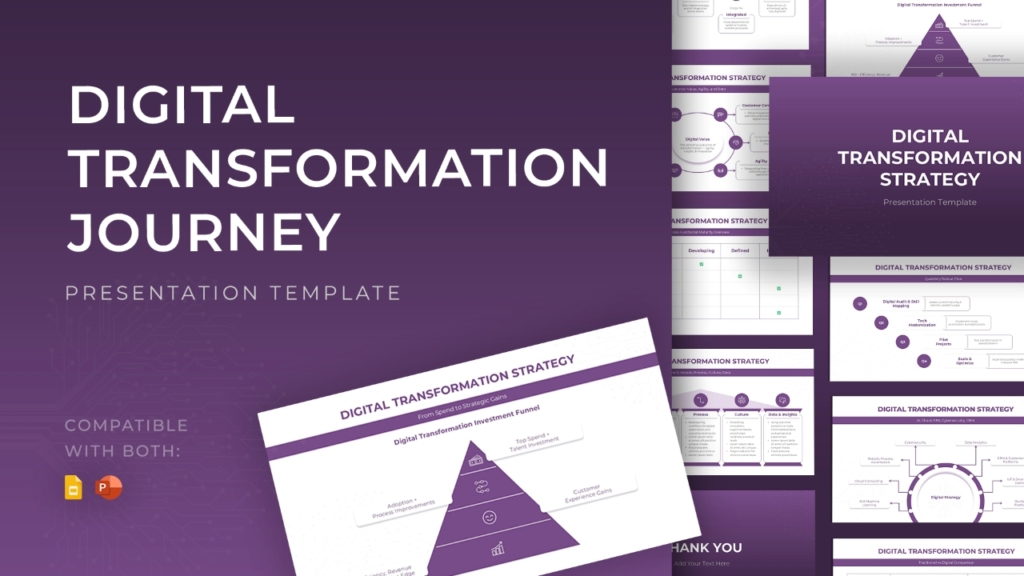
SlideKit’s PowerPoint and Google Slides templates include layouts for transformation stages, technology initiatives, organizational maturity, and investment planning.
Adapt the layouts to your organization’s actual strategy and evidence. A template should help communicate the plan, not dictate which initiatives the organization must pursue.