10 SWOT Analysis Examples for Business, Marketing, and Startups
A SWOT analysis is one of the most widely used strategic tools in business because it is both simple and honest. It forces a team to look at what is working, what is not, where the opportunities are, and what could go wrong. When done properly, it produces a clear picture that drives better decisions.
This article walks through ten practical SWOT analysis examples across business, marketing, and startup contexts. Each example illustrates how the four-part framework applies in different situations and how a SWOT analysis template can make the results easier to communicate in meetings and presentations.
What Are the Four Parts of a SWOT Analysis?
Before looking at examples, it helps to understand what belongs in each quadrant.
Strengths are internal advantages. They reflect what the organization or team does well and what gives it an edge over competitors. Strong brand recognition, an experienced team, proprietary technology, or a loyal customer base are all examples of strengths.
Weaknesses are internal limitations. These are areas where the business falls short or where resources, skills, or capabilities are lacking. Limited budget, high staff turnover, or poor online visibility might sit here.
Opportunities are external conditions the organization could take advantage of. A growing market, a competitor exiting a segment, or a shift in consumer behavior that aligns with what the business offers would all count as opportunities.
Threats are external risks that could negatively affect performance. Competitor activity, regulatory changes, economic downturns, or shifting customer preferences all fall into this category.
The distinction between internal (strengths and weaknesses) and external (opportunities and threats) is the most important rule to follow when filling out a SWOT analysis template. Mixing these up is the most common mistake teams make.
1. Technology Startup SWOT Analysis
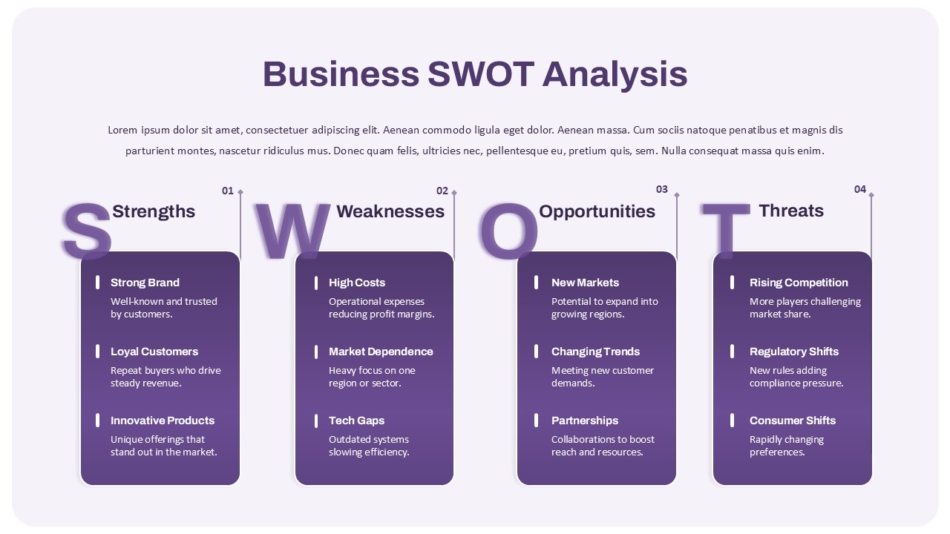
A tech startup entering a competitive software market might list its agile development team and low overhead costs as strengths. Its weaknesses could include limited brand awareness and a small client base in the early months. Opportunities might include a growing demand for the type of solution it offers and gaps left by slower-moving incumbents. Threats would likely include well-funded competitors and the risk of a larger player replicating the product.
This kind of SWOT is particularly useful in early-stage planning meetings, where the team needs to agree on where to focus energy and what risks to prepare for.
The Business SWOT Analysis PowerPoint Template provides a clean four-quadrant layout suited to this kind of strategic discussion, making it easy to present findings to co-founders, advisors, or early investors.
2. Restaurant Business SWOT Analysis
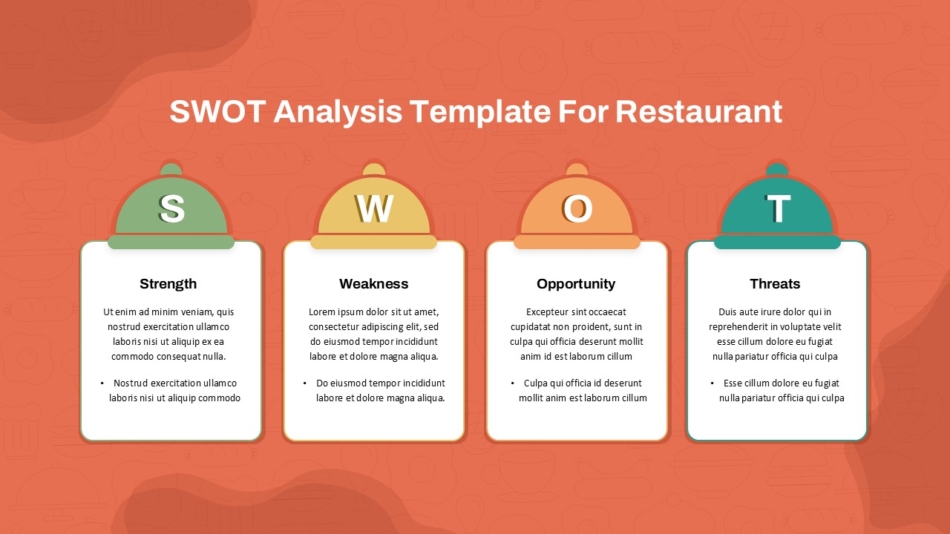
A restaurant evaluating its position in a competitive local market would look at its unique menu, location, and customer service reputation as potential strengths. Weaknesses might include limited seating capacity, inconsistent staffing, or a lack of online ordering. Opportunities could include growing demand for delivery platforms or underserved cuisine types in the area. Threats would cover new restaurant openings nearby and rising ingredient costs.
Food businesses run this analysis when considering expansion, repositioning, or responding to a shift in foot traffic or customer habits.
The SWOT Analysis Template for Restaurant is designed specifically for this context, with a layout that suits the structure and pace of food industry planning discussions.
3. Marketing Strategy SWOT Analysis
Marketing teams run SWOT analyses when planning campaigns, entering new channels, or reviewing annual strategy. For a brand launching a digital advertising campaign, strengths might include strong creative assets and an established email list. Weaknesses could be limited paid media experience or gaps in analytics capability. Opportunities might include an untapped audience segment on a newer platform. Threats could include rising ad costs and increased competition for attention in the same channels.
Using a SWOT at the strategy planning stage helps marketing teams prioritize budget and effort before committing to a direction.
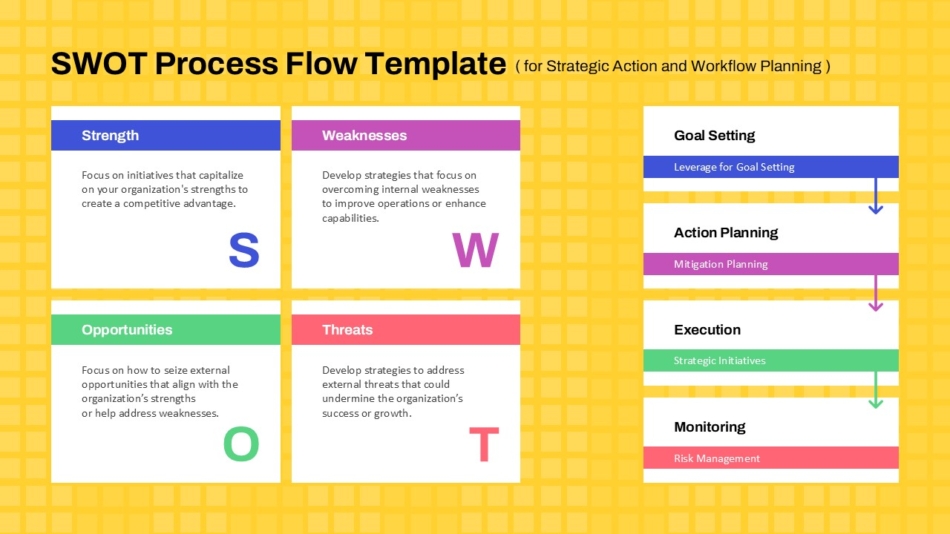
The SWOT Process Flow Template works well here, especially when the SWOT findings need to connect directly to campaign decisions and action plans rather than sitting as a standalone analysis.
4. Product Launch SWOT Analysis
Before launching a new product, a product team benefits from running a focused SWOT specifically around that product rather than the broader business. Strengths might include unique features, a ready distribution channel, or early positive feedback from beta users. Weaknesses could be a higher price point than existing alternatives or a longer onboarding process. Opportunities might come from a competitor’s product being discontinued or growing interest in the product category. Threats would typically include the risk of a larger competitor fast-following with a similar product.
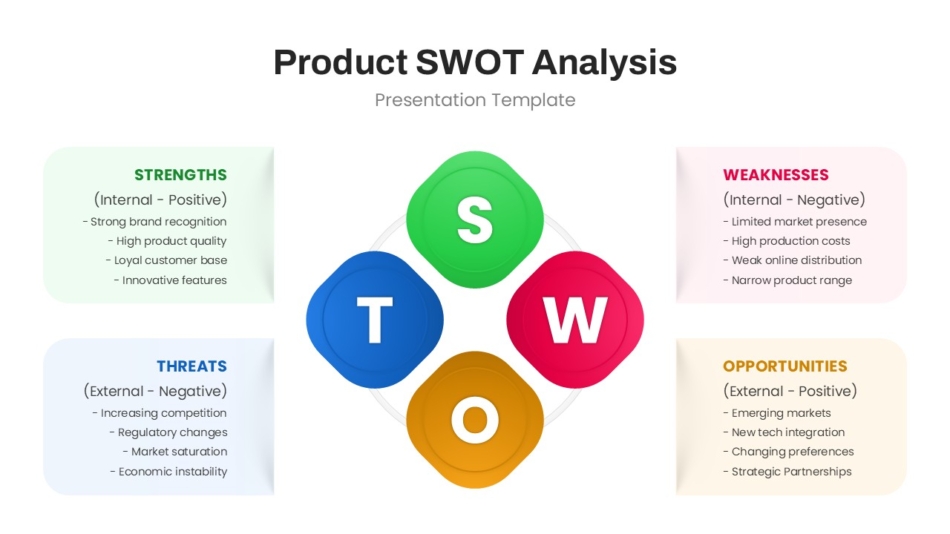
The Product SWOT Analysis Template is structured for exactly this purpose, keeping the focus on product-specific factors rather than pulling the analysis toward broader organizational concerns.
5. Non-Profit Organization SWOT Analysis
Non-profit organizations use SWOT analysis during funding cycles, strategic reviews, and program planning. A non-profit’s strengths might include a strong volunteer network, community trust built over years, and a clearly defined mission that resonates with donors. Weaknesses could include heavy dependence on a small number of funding sources, limited full-time staff capacity, or gaps in digital communication.
Opportunities for a non-profit might include new grant programs aligned with its focus area, growing public awareness around the cause it serves, or partnership possibilities with corporate social responsibility programs. Threats could involve funding cuts, policy changes that affect the communities it serves, or increased competition for donor attention from similar organizations.
Running this analysis before a fundraising campaign or annual planning cycle helps non-profit leadership focus limited resources on the areas most likely to create impact.
6. Educational Institution SWOT Analysis
Schools, colleges, and training organizations benefit from SWOT analysis when reviewing curriculum, planning enrollment strategy, or evaluating their position in a competitive education market. An educational institution’s strengths might include experienced faculty, a strong academic reputation, and established alumni networks. Weaknesses could include aging facilities, limited online learning infrastructure, or gaps in student support services.
Opportunities in this sector often include growing demand for specific qualifications, the expansion of online and hybrid learning formats, and partnerships with employers looking to co-develop programs. Threats might include declining enrollment in certain demographics, budget constraints from funding bodies, or the rise of alternative learning platforms that compete for the same students.
7. Small Business SWOT Analysis
Small businesses benefit from SWOT analysis more than many owners realize. Without large teams or dedicated strategy functions, a structured framework helps a small business owner step back and evaluate the bigger picture. Strengths might include personal relationships with customers, flexible decision-making, and a specific niche the business owns in its local market. Weaknesses could include limited marketing budget, dependence on a few key clients, or the owner being too central to daily operations for the business to scale.
Opportunities for a small business often appear in underserved local demand, the ability to move faster than larger competitors in response to trends, and digital tools that give small teams access to capabilities previously reserved for larger organizations. Threats tend to include larger competitors entering the local market, rising operating costs, and the vulnerability that comes with a small team when key staff leave.
A personal SWOT analysis follows the same structure applied to an individual, making it a useful tool not just for business owners but for anyone planning a career move, development path, or new direction.
8. Financial Planning SWOT Analysis
Finance teams and individual business owners use SWOT analysis during budget planning, investment decisions, and annual reviews. For a mid-size company evaluating a capital investment, strengths might include strong cash reserves and a low debt ratio. Weaknesses could be limited financial modeling capability internally or overreliance on a single revenue stream. Opportunities might involve favorable lending conditions or a new revenue channel with lower operating costs. Threats would include interest rate changes, foreign exchange exposure, or delayed receivables from key clients.
The Financial Planning SWOT Template provides a layout structured for financial and planning contexts, making it easier to present this kind of analysis to senior stakeholders and board members who need to review the findings quickly.
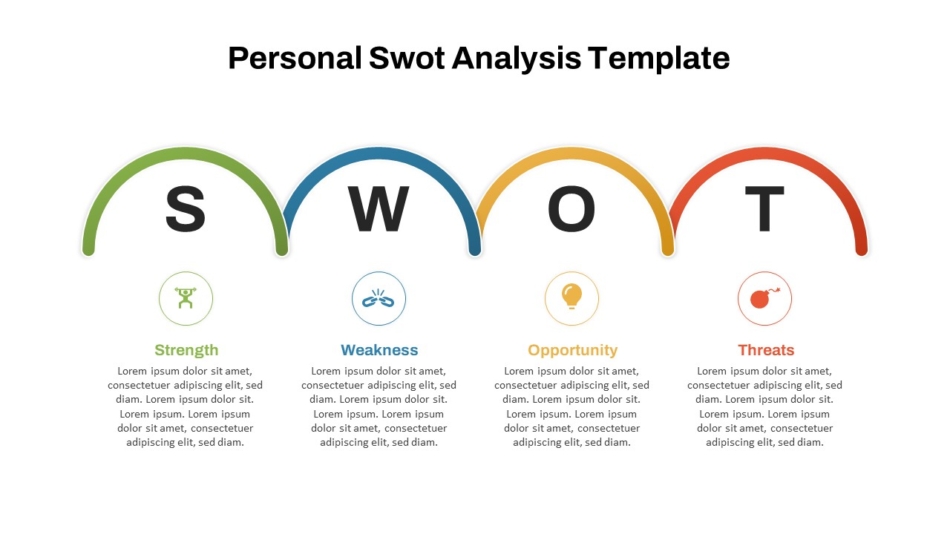
9. Personal SWOT Analysis
A personal SWOT analysis applies the same four-quadrant framework to individual career planning, professional development, and goal setting. Strengths might include technical skills, industry experience, or a strong professional network. Weaknesses could be a gap in a specific skill area, limited exposure to senior leadership, or difficulty with public speaking. Opportunities might include an opening in a target organization, a new professional qualification, or a mentor relationship that could accelerate development. Threats could be a contracting job market in a specific sector or a skills shift in the industry that makes current expertise less relevant.
Leaders and coaches regularly use personal SWOT analyses in performance reviews, coaching sessions, and career development conversations. The same presentation templates used for business strategy work equally well here with adapted content.
10. Human Resources SWOT Analysis
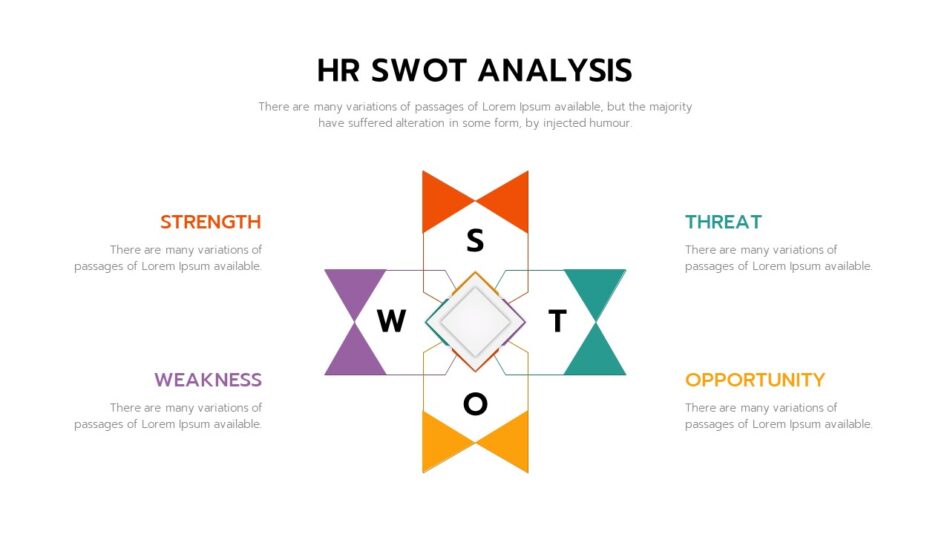
HR teams run SWOT analyses when reviewing talent strategy, planning hiring programs, or evaluating the impact of workforce changes. Strengths for an HR function might include a strong employer brand, a structured onboarding process, and high employee retention rates. Weaknesses could be gaps in technical recruitment capability or a lack of diversity in leadership pipelines. Opportunities might include remote work enabling access to a wider talent pool or new training technology that can scale development programs. Threats would typically cover a competitive hiring market for in-demand skills and potential changes to employment legislation.
The Human Resource SWOT Analysis Presentation is purpose-built for this context, with layouts suited to HR strategy presentations for senior management or board-level reporting.
Presenting SWOT Insights Effectively
Running a SWOT analysis produces useful insights only if those insights can be communicated clearly to the people who need to act on them. A well-organized visual template helps because it presents all four quadrants together, allowing the audience to see relationships between internal and external factors at a glance.
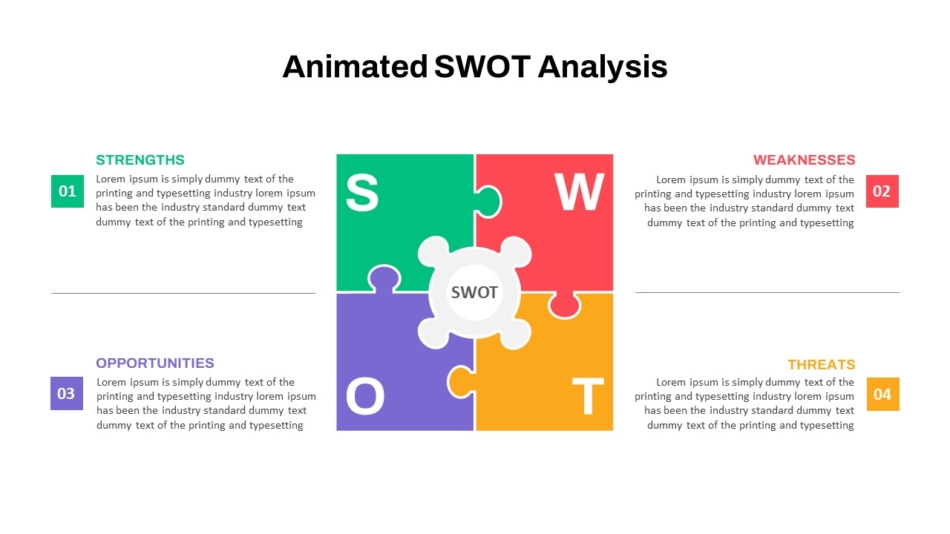
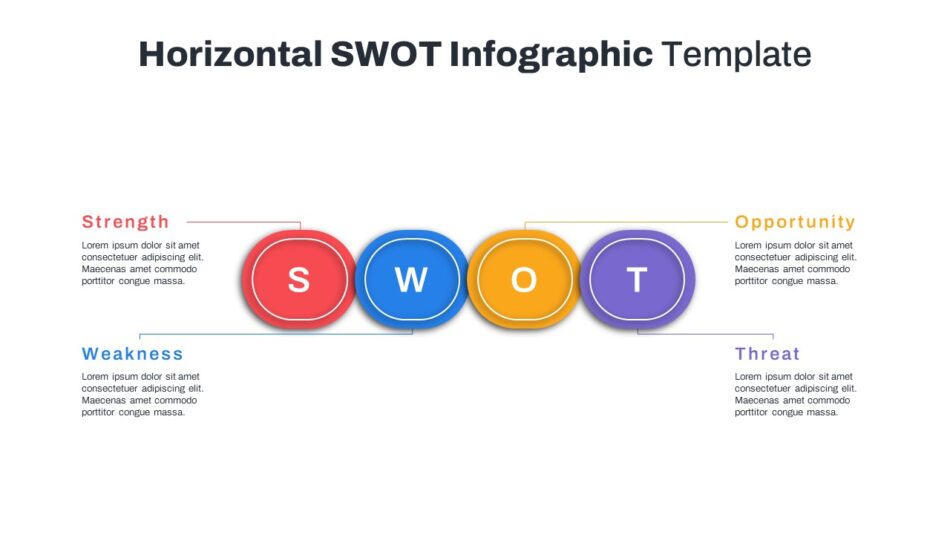
For presentations where standard grid layouts feel too static, the Animated SWOT Analysis Template and the Horizontal SWOT Analysis PPT Template offer alternative formats suited to more dynamic or visually distinctive presentation styles. When the SWOT findings are part of a broader strategy presentation, the SWOT Presentation Template provides a complete slide set that integrates the analysis within a full deck structure.
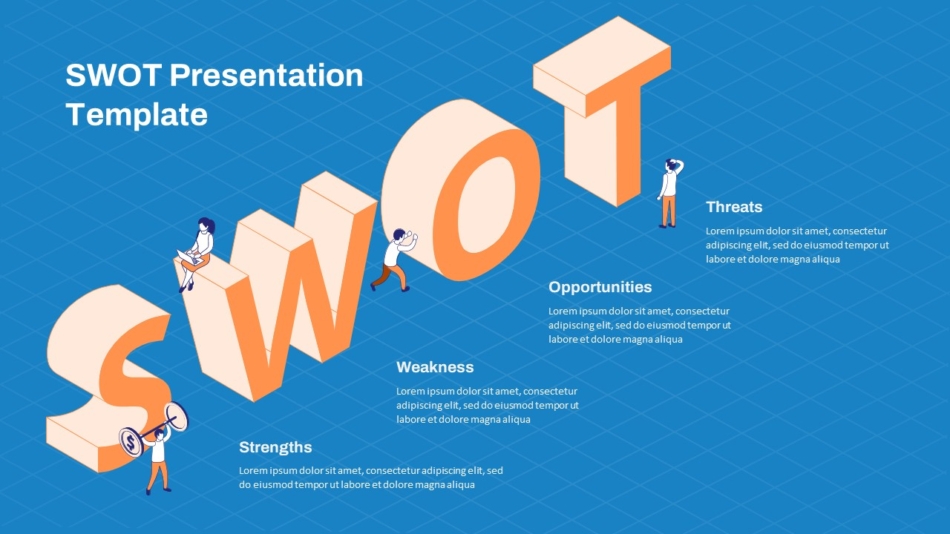
SlideKit SWOT Analysis Templates
SlideKit offers a range of SWOT analysis templates designed for business strategy, product planning, marketing, HR, and financial use cases. Each template is fully editable in both PowerPoint and Google Slides, with layouts that cover standard four-quadrant formats and alternative visual styles for different presentation contexts. For teams that use SWOT analysis regularly across departments, having a library of purpose-built templates means the analysis is always presented consistently and professionally, regardless of who is running the session or presenting the findings.
The Framework That Keeps Delivering
SWOT analysis has been in use for decades because the logic behind it remains sound. Looking clearly at internal strengths and weaknesses alongside external opportunities and threats gives any organization a more complete picture of where it stands. Whether the context is a startup, a non-profit, a school, a small business, an HR strategy review, or a personal development plan, the four-quadrant structure cuts through complexity and produces findings that are actually usable. A well-designed SWOT analysis template is what makes those findings easy to share.